
Aluminum Alloy Selection Guide
Choose the right alloy for your project. Compare 1xxx through 7xxx series by strength, corrosion resistance, weldability, and cost.
Understanding the Alloy Designation System
Aluminum alloys follow a standardized 4-digit numbering system. The first digit identifies the primary alloying element, which determines the alloy's core properties.
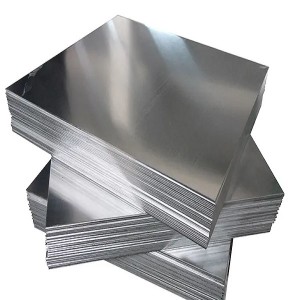
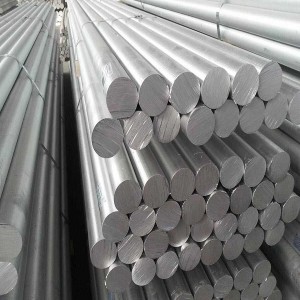
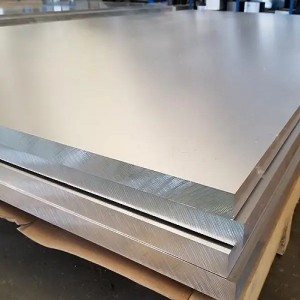
The International Alloy Designation System (IADS) assigns a four-digit number to every wrought aluminum alloy. The first digit defines the alloy series and its principal alloying element. This single digit tells you more about an alloy's behavior than any other specification detail.
| Series | Primary Alloying Element | Key Property | Common Alloys |
|---|---|---|---|
| 1xxx | None (99%+ pure aluminum) | Excellent corrosion resistance, high conductivity | 1060, 1100 |
| 2xxx | Copper (Cu) | High strength, heat treatable | 2024, 2A12 |
| 3xxx | Manganese (Mn) | Good formability, moderate strength | 3003, 3004, 3105 |
| 5xxx | Magnesium (Mg) | Best corrosion resistance, weldable | 5052, 5083, 5754 |
| 6xxx | Magnesium + Silicon (Mg-Si) | Versatile, heat treatable, extrudable | 6061, 6063, 6082 |
| 7xxx | Zinc (Zn) | Highest strength aluminum alloys | 7075, 7050 |
Quick Decision Flowchart
Answer one question to narrow down your alloy choice. Start with your most critical requirement.
Complete Alloy Comparison Table
Side-by-side comparison of 10 popular aluminum alloys across mechanical, fabrication, and application properties.
| Alloy | Series | Tensile Strength (MPa) | Yield Strength (MPa) | Elongation % | Corrosion | Weldability | Formability | Machinability | Typical Applications | Available Forms |
|---|---|---|---|---|---|---|---|---|---|---|
| 1060 | 1xxx | 70 | 30 | 43 | Excellent | Excellent | Excellent | Poor | Chemical equipment, heat exchangers, reflectors | Sheet, Plate |
| 1100 | 1xxx | 90 | 35 | 35 | Excellent | Excellent | Excellent | Poor | Food processing, fin stock, decorative trim | Sheet, Plate |
| 3003 | 3xxx | 110 | 42 | 30 | Excellent | Excellent | Excellent | Fair | HVAC, cooking utensils, roofing, general sheet metal | Sheet, Plate |
| 5052 | 5xxx | 230 | 195 | 12 | Excellent | Good | Good | Fair | Marine hardware, fuel tanks, pressure vessels | Sheet, Plate |
| 5083 | 5xxx | 305 | 215 | 16 | Excellent | Excellent | Good | Fair | Shipbuilding, offshore platforms, cryogenic tanks | Sheet, Plate |
| 5754 | 5xxx | 245 | 100 | 26 | Excellent | Excellent | Excellent | Fair | Automotive body panels, floor panels, flooring | Sheet, Plate |
| 6061 | 6xxx | 310 | 275 | 12 | Good | Good | Good | Good | Structural, CNC machining, mold, tooling, marine fittings | Sheet, Plate, Bar |
| 6082 | 6xxx | 340 | 310 | 10 | Good | Good | Good | Good | Structural beams, bridges, transport, offshore | Sheet, Plate, Bar |
| 7050 | 7xxx | 510 | 455 | 11 | Fair | Poor | Poor | Good | Aerospace structures, bulkheads, wing skins | Plate, Bar |
| 7075 | 7xxx | 570 | 505 | 11 | Fair | Poor | Poor | Excellent | Aerospace, military, high-stress structural, mold | Sheet, Plate, Bar |
Values shown are typical for common tempers (H32 for 5xxx, T6/T651 for 6xxx/7xxx, O for 1xxx/3xxx). Actual values depend on specific temper and product form.
Temper Designation Guide
The letter-number suffix after an alloy (e.g., 6061-T6) specifies how the metal was processed. This directly affects strength, hardness, and formability.
Annealed
Fully soft condition with maximum ductility. Used when extensive forming or bending is required before final treatment. Lowest strength state.
Strain Hardened Only
Strengthened by cold working (rolling, drawing). The second digit (2, 4, 6, 8) indicates degree of hardening: H12 = quarter-hard, H14 = half-hard, H18 = full-hard.
Strain Hardened + Partially Annealed
Cold worked beyond the desired strength, then partially annealed back. Provides better ductility than H1x at similar strength levels.
Strain Hardened + Stabilized
Cold worked then low-temperature stabilized to prevent age softening. Used for Al-Mg alloys (5xxx series) that may otherwise lose strength over time.
Solution Heat Treated + Cold Worked
Solution treated at high temperature, quenched, then cold worked to improve strength. Naturally aged to a stable condition. Common for 2024-T3 aerospace sheet.
Solution Heat Treated + Naturally Aged
Solution treated and quenched, then allowed to age at room temperature. Provides moderate strength with good formability for post-forming operations.
Solution Heat Treated + Artificially Aged
The most common high-strength temper. Solution treated, quenched, then aged at elevated temperature (150-200C) for peak strength. Standard for 6061-T6, 7075-T6.
T6 + Stress Relieved by Stretching
T6 treatment followed by controlled stretching (1-3%) to relieve internal stresses. Essential for thick plate to prevent warping during machining.
Alloy Selection by Application
Recommended alloys for the six most common industries we serve.
Marine & Shipbuilding
Hull plating, superstructures, offshore platforms. Requires DNV/BV/ABS certification and superior saltwater resistance.
Aerospace & Aviation
Airframe structures, wing skins, bulkheads. Demands highest strength-to-weight ratio and fatigue resistance.
Automotive
Body panels, chassis components, heat shields. Focuses on lightweight strength and good formability.
Construction
Curtain walls, roofing, cladding, structural framing. Needs good weathering and easy fabrication.
Electronics
Heat sinks, enclosures, LED housings, bus bars. Prioritizes thermal conductivity and surface finish quality.
Packaging
Foil containers, beverage cans, blister packs. Requires food-safe grades with excellent formability.
Alloy Selection FAQ
Answers to the most frequent questions our engineers receive about choosing aluminum alloys.
Still Not Sure Which Alloy to Choose?
Our engineers can recommend the right alloy, temper, and product form for your specific application. Get a free consultation with your quote.
Get a Free Consultation