
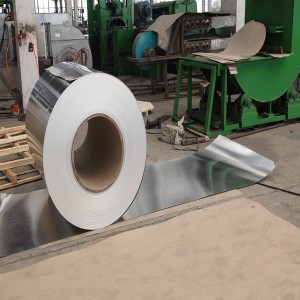
Thin-gauge aluminum coil, sheet and circles for formed parts.
Packaging and general fabrication orders need clear gauge, width, temper, surface condition, slitting and coil packing. This page is organized around how the material will be converted.
The packaging page follows coil-to-part logic.
For thin-gauge aluminum, the buyer's conversion method matters as much as the alloy. This page shows how coil width, temper and surface condition affect final forming.
Gauge and width
Confirm thickness, width tolerance, coil ID and slit edge requirement.
Temper choice
Soft, semi-hard or harder tempers are selected for stamping, drawing or forming.
Surface condition
Oil, dry surface, film or surface cleanliness is aligned with downstream process.
Coil packing
Moisture protection, pallet direction, labels and export packing are planned before shipment.
Packaging and fabrication use different aluminum product forms.
Slit coil and strip
For continuous forming, stamping and container production where width control is central.
Aluminum circles
For cookware and drawn parts where surface and edge quality affect forming.
General fabrication sheet
For covers, formed panels and light fabrication where cut size and packing matter.
Packaging and fabrication selection table.
| Application | Typical alloy | Product form | Important note |
|---|---|---|---|
| Food container or tray | 3003 / 8011 | Coil / sheet | Temper and surface cleanliness |
| Cookware blank | 1050 / 3003 | Circle | Deep drawing and edge quality |
| Light cover or shell | 1060 / 3003 / 5052 | Sheet | Cut size and forming requirement |
| General fabrication strip | 1060 / 3003 | Slit coil | Width tolerance, burr and packing |
Thin-gauge aluminum selected by conversion method.
Packaging and general fabrication buyers usually need width, temper and coil handling confirmed before alloy selection becomes useful.
Slit coil
Width-controlled coil for continuous forming, stamping and repeated fabrication lines.
Aluminum circles
Circle blanks for drawn cookware, containers and round formed parts with edge and surface control.
Thin sheet
1060, 3003 and 5052 sheet for covers, shells, trays and light fabricated parts.
Container material
3003 and 8011 material where temper, cleanliness and surface condition affect forming.
Coil and thin sheet checklist
- Gauge and width: thickness tolerance, slit width and edge condition should match conversion equipment.
- Temper choice: soft, semi-hard or harder material depends on stamping, drawing and forming depth.
- Surface condition: dry, oiled, film-protected or clean surface should be confirmed before supply.
- Coil packing: coil ID, eye direction, pallet and moisture protection affect receiving and storage.
Packaging orders are process orders.
The useful solution is more than a material grade. It is repeatable control of coil width, temper, surface, edge and moisture-safe export packing.
Questions for coil and thin sheet buyers.
What information is needed for coil?
Alloy, temper, thickness, width, coil ID, surface condition, edge requirement and packing method are the main inputs.
Can you supply circles?
Yes. Send diameter, thickness, alloy, temper, surface requirement and quantity so the circle blank can be checked.
What affects deep drawing?
Temper, surface condition, edge quality and material consistency all affect drawing performance.
How do you reduce moisture risk?
Moisture barrier, pallet planning, coil eye direction and export packing should be confirmed for sea shipment.
Give us conversion details before coil quotation.
Thin-gauge aluminum is sensitive to downstream equipment. Width, temper, edge and packing matter as much as alloy.
- Alloy and temper
- Thickness and width
- Coil ID and weight preference
- Edge and burr requirement
- Surface condition
- Packing and moisture protection
Need coil, circles or thin sheet for conversion?
Send alloy, temper, thickness, width, coil ID, surface requirement and packing method. We will match the supply format around your production line.
Request packaging material