
5052 Aluminum Sheet
5052 aluminum sheet is a versatile Al-Mg alloy offering excellent corrosion resistance, good workability, and moderate-to-high strength. Available in O, H32, H34, H36, and H38 tempers with thickness from 0.2mm to 6.0mm.
Overview
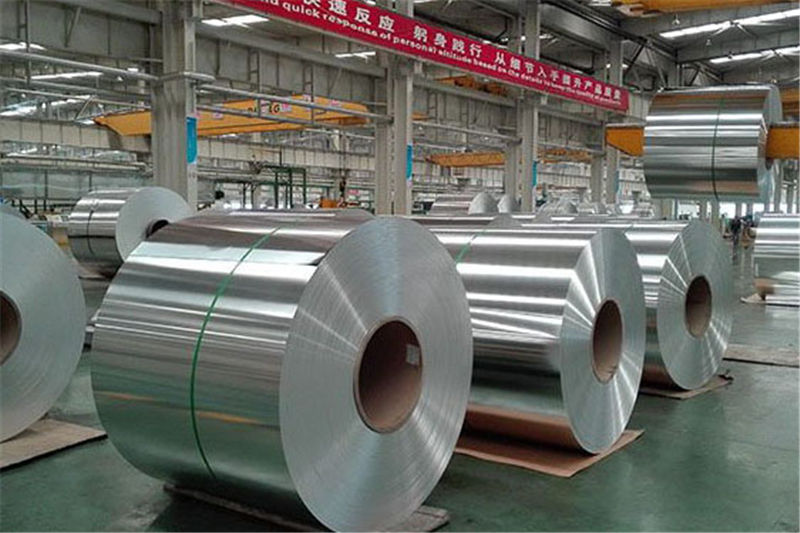
5052 aluminum sheet is an Al-Mg (aluminum-magnesium) alloy that stands as the most widely used non-heat-treatable sheet alloy in the industry. With a magnesium content of 2.2-2.8%, it delivers an excellent combination of moderate-to-high strength, outstanding corrosion resistance, and superior workability that makes it suitable for a remarkably broad range of applications.
This alloy exhibits particularly strong resistance to saltwater and marine atmospheric corrosion, which has made it the material of choice for marine hardware, boat hulls, and coastal architectural applications. Its good formability in the annealed (O) temper allows complex shapes to be achieved through bending, stamping, and deep drawing, while the strain-hardened tempers (H32, H34) provide higher strength for structural uses.
5052 aluminum sheet is readily weldable by all common methods including TIG, MIG, and resistance welding. It is commonly specified for marine components, automotive body panels, fuel tanks, chemical equipment, food processing machinery, electronic enclosures, and general sheet metal fabrication where corrosion resistance is a priority.
Chemical Composition
Per ASTM B209 standard specification for aluminum and aluminum-alloy sheet and plate.
| Element | Si | Fe | Cu | Mn | Mg | Cr | Zn | Others (each) | Al |
|---|---|---|---|---|---|---|---|---|---|
| Max % | 0.25 | 0.40 | 0.10 | 0.10 | 2.2 - 2.8 | 0.15 - 0.35 | 0.10 | 0.15 | Balance |
Mechanical Properties
Properties vary by temper designation. All values are typical for sheet thickness 1.0 - 6.0mm.
| Temper | Tensile Strength (MPa) | Yield Strength (MPa) | Elongation (%) | Hardness (HB) |
|---|---|---|---|---|
| O (Annealed) | 170 - 215 | 65 | 25 | 47 |
| H32 | 215 - 265 | 160 | 12 | 60 |
| H34 | 235 - 285 | 180 | 10 | 68 |
Available Specifications
Custom sizes available on request. All products comply with ASTM B209 tolerance standards.
| Parameter | Range | Notes |
|---|---|---|
| Thickness | 0.2 - 6.0 mm | Precision tolerance per ASTM B209 |
| Width | 100 - 2500 mm | Custom slitting available |
| Length | 500 - 12000 mm | Cut-to-length service |
| Tempers | O / H32 / H34 / H36 / H38 | H32 and H34 most commonly stocked |
| Tolerance | ASTM B209 | Tighter tolerances on request |
Applications
5052 aluminum sheet serves a wide range of industries due to its excellent balance of strength, corrosion resistance, and formability.

Marine & Shipbuilding
Boat hulls, marine hardware, dock platforms, and saltwater-exposed components. Excellent resistance to seawater and marine atmospheres.
Automotive Body Panels
Inner and outer body panels, fuel tanks, oil lines, and structural brackets. Good formability for complex automotive shapes.
Chemical & Food Equipment
Storage tanks, pressure vessels, food processing equipment, and chemical containers. Non-toxic and corrosion resistant.
Electronics & Enclosures
Electronic chassis, heat sinks, appliance housings, and signage panels. Good surface finish and anodizing response.