
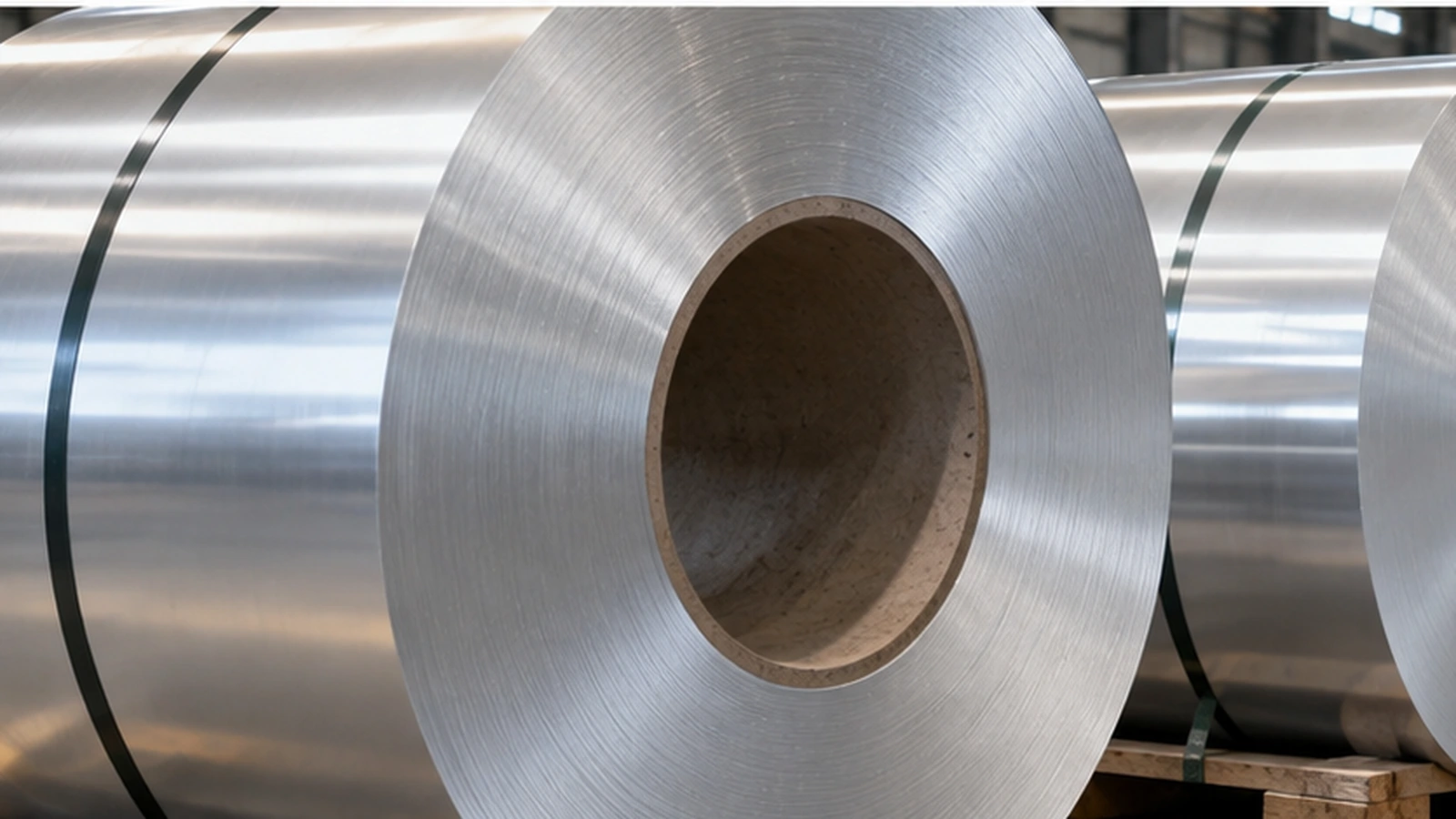
When evaluating an aluminum coil prices supplier in China, buyers should verify supplier evidence and product fit before comparing the headline price. For a 5052 aluminum requirement, the RFQ should define whether the purchase is coil, sheet or plate, the exact alloy and temper, thickness and width, coil ID and OD where applicable, maximum coil weight, surface condition, processing, documentation, packing and delivery basis. The supplier should then return evidence that connects those requirements to the exact material being offered. A lower price may simply reflect a different temper, coil geometry, surface condition, processing scope, certificate package or commercial term. Supplier shortlisting should therefore follow the sequence evidence → product fit → RFQ alignment → commercial comparison.
Start the Supplier Review by Confirming the Product Form
The first question is whether the supplier is actually quoting the same product form the buyer needs.
Coil, sheet and plate are related aluminum products, but they are not commercially or operationally identical. Coil introduces variables such as inside diameter, outside diameter, coil weight, winding condition, edge condition and slitting. Sheet introduces finished length, width and flatness requirements. Plate may enter a different handling and fabrication route.
Buyers can review TOP METAL's Aluminum Sheet category as a starting point for available flat-aluminum product forms, but the RFQ should identify exactly whether the manufacturing process requires coil, cut sheet or plate.
If suppliers quote different forms, the prices are not directly comparable.
Verify 5052 Alloy and Temper in the Technical Offer
A supplier quotation should identify 5052 explicitly when that is the required alloy.
The alloy designation alone is still incomplete because different temper conditions can change forming behavior and suitability for downstream processing. If the buyer already has a specified temper, it should appear on the RFQ. If the temper is not frozen, the buyer should describe the intended forming, bending, stamping, welding or other fabrication route and ask the supplier to return the proposed temper for technical approval.
The supplier review should therefore ask:
- Is the quoted alloy exactly 5052?
- What temper is being offered?
- Does the supplier identify any substitution?
- Is the offered condition suitable for the buyer's downstream process?
A quotation that silently substitutes another alloy or temper should not remain in the same commercial comparison without engineering review.
Thickness and Width Evidence Should Match the Buyer’s Process Window
Nominal thickness and width are not enough when the customer's process has controlled dimensional limits.
The buyer should define the required thickness, tolerance basis and finished width. If slitting is required, the quotation should identify whether the offered width is the mother-coil width or the final slit width.
This affects both product fit and material yield. A master coil that requires additional slitting is commercially different from a coil already supplied at the production width. Tolerance differences can also affect forming, fit, component weight and downstream setup.
Supplier evidence may include the offered dimensional specification, applicable tolerance basis, inspection method or lot-linked dimensional records when required by the project.
Coil ID, OD and Weight Must Fit the Buyer’s Equipment
A coil can meet the alloy, temper, thickness and width requirements and still be unsuitable for the customer's line if its physical coil build does not fit the decoiler or material-handling equipment.
For a coil purchase, the buyer should state:
- Required or acceptable coil inside diameter
- Maximum outside diameter where relevant
- Target or maximum coil weight
- Core requirement if applicable
- Any handling or unloading limitation
The supplier should return the proposed coil build rather than assume that a standard mill coil fits the customer's equipment.
The buyer decision is straightforward:
Equipment limit → required coil geometry → supplier confirmation → compatibility decision.
A lower material price has little value if the coil cannot be loaded onto the buyer's production line.
Surface Condition Should Be Defined for the Exact 5052 Product Being Quoted
For supplier evaluation, the buyer should define the required surface condition for the exact 5052 product being quoted rather than rely on a general aluminum-product description.
The specification may need to state:
- Whether mill finish is acceptable
- Whether one or both faces are appearance-critical
- Whether protective film is required
- Whether the material will later be painted, anodized, laminated or otherwise finished
- Which visible defects or handling damage are unacceptable
If one quotation includes surface protection and another supplies unprotected material, the price difference may reflect delivery condition rather than supplier competitiveness.
Ask the Supplier to State the Governing Standard Instead of Assuming One
If the project requires ASTM B209, an EN specification, JIS, GB/T or another material standard, the RFQ should identify the exact governing specification and require the supplier to confirm the basis used for the offered material.
A statement such as “international standard” is not enough for supplier evaluation. The buyer needs to know which material, dimensional or testing requirements the supplier is actually agreeing to meet.
If a drawing or customer specification introduces tighter requirements than the general material standard, that relationship should also be stated in the RFQ.
The supplier should return any conflict or exception rather than silently choosing the requirement that is easiest to produce.
Material Certificates and Traceability Need to Be Relevant to the Delivered Coil
Supplier evaluation should examine the scope of the evidence, not only whether a certificate exists.
The buyer should ask what material or mill documentation is available for the offered 5052 material and whether it can be connected to the actual production lot or coil being delivered.
Depending on the purchase specification, evidence may need to confirm:
- Alloy identity
- Temper
- Required chemistry or mechanical data
- Coil or lot identification
- Dimensional inspection
- Project-specific test or inspection records
A generic certificate that cannot be connected to the delivered material has limited procurement value.
If slitting or cut-to-length processing creates several child coils or sheets from one parent coil, the buyer should also define the required traceability after processing.
Evaluate Supplier Capability Against the Requested Processing Scope
TOP METAL's company scope includes multiple aluminum product forms and custom processing support. The exact operation included in a specific quotation, however, still needs to be confirmed order by order.
If the buyer requires:
- Slitting
- Cut-to-length processing
- Protective film
- Coating
- Anodizing
- Perforation
- Other drawing-based processing
the supplier should identify which operations are included in the commercial offer and which are optional or separately priced.
This is important because two suppliers may quote a similar 5052 base-material price while including very different processing scopes.
Packing Evidence Matters When the Material Is Purchased Internationally
A supplier shortlist should also consider how the coil will be protected, handled and identified during shipment.
For an international order, ask the supplier to return a packing description appropriate to the actual coil dimensions and transport route. Depending on the project, the buyer may need to confirm:
- Coil orientation
- Skid or pallet arrangement
- Edge protection
- Moisture protection
- Package weight
- Lifting access
- Identification labels
Packing photographs, a packing description or a project-approved configuration can provide better supplier evidence than a generic statement such as “export packing included.”
If seaworthy packing, container loading or port delivery is required, those items should be made visible in the quotation because they affect the final commercial number.
Compare the Commercial Basis Only After the Technical Evidence Is Aligned
Aluminum coil quotations may use different commercial units and delivery bases.
Prices may be stated per:
- Metric ton
- Kilogram
- Pound
- Coil
They may also use different currencies, Incoterms and quotation-validity periods.
Before ranking suppliers by price, normalize:
product form → alloy → temper → dimensions → coil geometry → surface → processing → documents → packing → delivery basis.
If one supplier excludes slitting, certificates, export packing or freight that another supplier includes, the headline price difference should not be treated automatically as a material-cost advantage.
Use the 5052 Product Page as the Product-Fit Reference
TOP METAL's 5052 grade aluminium plate/coil product page confirms the relevant 5052 product direction for this sourcing topic.
The product page is a starting point for technical matching. Exact product form, temper, dimensions, tolerance, coil build, surface condition, governing standard, processing and document scope still need to be confirmed for the actual quoted order.
Supplier evaluation should therefore use the page to identify the target product family, then use the RFQ and supplier evidence to determine whether the specific offer fits the buyer's application.
Use an Evidence Checklist Before Shortlisting the Supplier
| Evidence Area | What the Buyer Should Verify | What the Supplier Should Return | Why It Affects the Decision |
|---|---|---|---|
| Product form | Coil, sheet or plate; mother coil or slit coil | Exact offered delivery form | Different forms require different dimensions, processing and price bases |
| Alloy and temper | 5052 and the required material condition | Exact alloy-temper offered and any substitution | Determines technical equivalence and downstream fabrication fit |
| Dimensions | Thickness, tolerance, width, ID, OD and coil weight | Achievable dimensions and coil build | Controls line compatibility and usable material yield |
| Surface | Required finish, visible side and protective film | Offered delivery condition | Changes downstream processing and appearance risk |
| Standard | Exact project or material specification | Confirmed governing basis and deviations | Defines what the supplier is contractually promising |
| Traceability | Required coil or lot identification | Material document and identification method | Connects incoming material to the declared specification |
| Processing | Slitting, cut-to-length, coating or other operations | Included, optional and excluded processing | Separates base-material cost from value-added scope |
| Inspection | Required dimensional, document or third-party review | Inspection scope and available records | Determines whether supplier claims can be verified |
| Packing | Protection, skid/pallet, orientation and labels | Proposed packing configuration | Affects delivery risk and export cost |
| Commercial basis | Currency, quotation unit, Incoterm, destination and validity | Complete commercial basis | Makes supplier prices commercially comparable |
A supplier should reach the shortlist because both the product and the supporting evidence fit the buyer's requirement—not simply because one price line is lower.
When Should the Buyer Reopen the Supplier Comparison?
Supplier comparison should be reopened whenever a material or quotation assumption changes after the initial offer.
Examples include:
- Changing from coil to sheet
- Changing alloy or temper
- Changing thickness tolerance
- Changing finished width
- Changing coil ID, OD or weight
- Adding or removing protective film
- Adding slitting or other processing
- Changing document or inspection requirements
- Changing packing scope
- Changing destination or delivery term
The previous supplier ranking may no longer be valid after one of these changes because the suppliers are no longer pricing the same technical and commercial scope.
Send an RFQ That Lets the Supplier Return Verifiable Evidence
A strong 5052 aluminum RFQ should state:
- Required product form: coil, sheet or plate
- 5052 alloy
- Exact required temper or downstream fabrication route
- Thickness and tolerance
- Finished width
- Coil ID and OD where applicable
- Maximum coil weight
- Surface condition
- Applicable standard or project specification
- Slitting or other processing
- Quantity
- Required material documents and traceability
- Inspection requirements
- Packing requirements
- Destination and delivery term
Ask the supplier to return the exact offered configuration, evidence scope, processing scope, packing proposal, assumptions and every deviation.
Once the supplier evidence and product-fit requirements are aligned, submit the project through TOP METAL's Request Quote page. The objective is to shortlist a supplier that can document and deliver the required 5052 material—not simply the supplier showing the lowest aluminum coil price.