
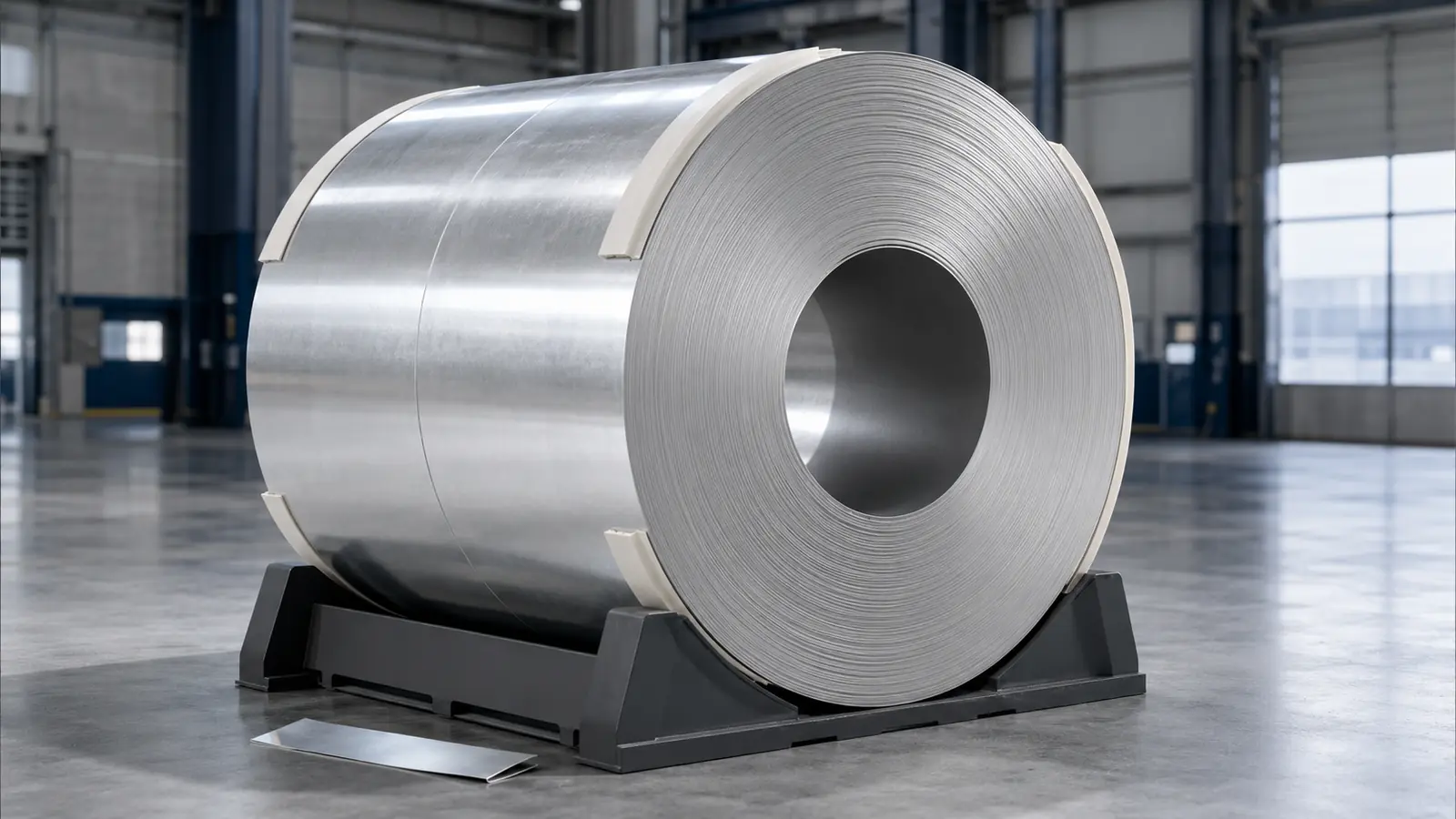
Before production, buyers should freeze the 5083 aluminum coil’s governing material standard, temper, thickness and tolerance, width and edge condition, coil inside diameter, maximum outside diameter or coil weight, surface condition, test and traceability requirements, packing method and acceptance plan. The application and downstream process must also be stated. “Marine grade aluminum coil 5083” is a useful product description, but it is not a complete production specification.
The objective is not to create a longer RFQ. It is to remove decisions that would otherwise be made after the price is accepted. Coil orders are particularly sensitive because a change in temper, width, inside diameter or maximum coil weight can affect slitting, feeding, forming, welding, storage and freight. A technically complete inquiry lets suppliers return comparable offers and gives the receiving plant a clear basis for acceptance.
Freeze the application and governing standard first
Start by describing where the material will be used and what will happen to it after delivery. Marine exposure can mean direct seawater contact, a coastal atmosphere, an interior fabricated component or equipment that only sees occasional splash. Those service conditions may lead to different material and corrosion-testing requirements. The forming route also matters: a coil intended for roll forming, blanking, stamping or welded fabrication should not be specified only by end-use industry.
Then name the governing standard and required edition when the contract depends on it. ASTM B209/B209M covers aluminum and aluminum-alloy flat sheet, coiled sheet and plate across listed alloys and tempers. For high-magnesium alloy products intended for marine service and similar environments, ASTM B928/B928M includes additional product and corrosion-related provisions for listed alloy-tempers. A drawing, classification requirement or customer specification may impose another standard. The buyer should identify which document controls instead of asking for “ASTM material” without a designation.
If no standard has been selected, give the supplier the service environment, design basis and required evidence, then ask for the proposed standard and temper to be declared. Engineering approval should occur before production, not after the material certificate arrives.
Why alloy 5083 alone is not enough
5083 identifies an aluminum-magnesium alloy composition range. It does not identify the temper, product form, property limits, corrosion-testing route or dimensional tolerance. Two coils can both be called 5083 while being unsuitable substitutes for one another in a controlled fabrication program.
Temper is the first missing field. It records the condition produced by mechanical and thermal processing and is linked to the applicable mechanical-property requirements. H116 and H321 are commonly associated with specified marine product routes, but the correct temper depends on the governing standard, service and downstream operation. A general fabrication requirement may use another temper. The order should never shorten a design-controlled designation to “5083” for convenience.
The buyer should also distinguish coil from cut sheet or plate. Coiled sheet has handling and geometry variables that do not appear in the same way on individual plates. If the final parts require plate-level flatness after decoiling, that expectation needs to be stated with a suitable measurement and acceptance method.
A specification-freeze table for 5083 coil
| Field to freeze | Buyer input | Supplier confirmation |
|---|---|---|
| Material basis | Alloy, temper, governing standard and required edition | Exact offered designation and any deviation |
| Dimensions | Nominal thickness, width, tolerance class and measurement units | Achievable tolerances and inspection method |
| Coil build | Inside diameter, maximum outside diameter, target or maximum coil weight | Actual production range and winding arrangement |
| Edges | Mill edge or slit edge, burr and edge-damage limits if critical | Proposed slitting and edge-control method |
| Surface | Mill finish or agreed finish, appearance limits, protective film if required | Surface route, protected side and handling precautions |
| Performance evidence | Chemical, mechanical, corrosion or other project-required records | Certificate type, lot basis, sampling and test references |
| Packing | Eye orientation, pallet or skid limits, moisture and edge protection, labels | Packaging construction and shipping marks |
| Acceptance | Inspection points, sample plan, document review and nonconformance process | Inspection record and deviation list |
Lock the temper to the service and fabrication route
A temper should be chosen with both service performance and manufacturability in mind. A stronger condition is not automatically better if the downstream operation needs tight bending or deep forming. Conversely, choosing a softer condition without checking design properties can create a structural mismatch. Welding, forming radius, springback and the property condition after fabrication should be reviewed by the project engineer.
For marine applications, avoid treating the marketing phrase “marine grade” as a substitute for the corrosion provisions in the controlling specification. High-magnesium 5xxx alloys can become susceptible to intergranular corrosion when microstructural conditions are unfavorable. ASTM G67 is one method used to evaluate susceptibility by mass loss after nitric-acid exposure. Whether that test, another test or a producer capability requirement applies should come from the governing product standard and project documents.
The RFQ should therefore ask for the exact alloy-temper designation and the relevant compliance evidence, not a general statement that the coil is corrosion resistant. If the project has classification, owner or third-party requirements, identify them at the inquiry stage and list the documents that must be reviewed before shipment.
Define thickness tolerance as a production control, not a footnote
Nominal thickness is only the center of the requirement. The permitted variation affects part mass, forming load, weld fit-up, material yield and downstream setup. State whether the tolerance comes from the governing material standard or from a project-specific requirement. If a tighter tolerance is necessary, place it on the drawing and ask the supplier to confirm capability before price approval.
Measurement details can matter when the range is narrow. Define the unit system, excluded edge zone if specified, instrument or method where contractually necessary, and how coil-end readings will be treated. Do not combine SI and inch-pound tolerances from different tables. The selected standard and unit system should be used consistently.
When estimating order mass or planning yield, use the agreed nominal dimensions and density basis, but do not turn a theoretical weight into an incoming-acceptance substitute for thickness and width measurements. Actual coil weight is a logistics and quantity field; dimensional conformance is a separate check.
Width, edge condition and camber must match the line
Coil width should be tied to usable width at the customer’s process. A mill-edge coil and a slit-edge coil may carry different edge profiles, width capability and burr expectations. If the material feeds guide rolls, a progressive die or a narrow slitting line, state the allowed width tolerance, camber or lateral deviation and edge condition that the equipment can accept.
Burr direction may matter for stamping, handling or a finished edge. Edge waves, dents and telescoping can interfere with stable feeding even when the nominal width is correct. If these conditions are critical, define how they will be inspected and what constitutes rejection. A phrase such as “good edge” is not measurable.
Buyers comparing supply options can first review the aluminum coil product category, then issue the exact width, tolerance and edge requirements for the target line. A category range is useful for navigation; it is not a substitute for a process-specific coil specification.
Match coil inside diameter and weight to handling equipment
Inside diameter must match the decoiler mandrel and expansion range. Maximum outside diameter must fit guards, cradles and storage positions. Coil weight must remain within the capacity of lifting equipment, mandrels, carts, racks and floor systems. These are plant-interface requirements, so the buyer—not the mill—should confirm them.
State the required inside diameter and permitted variation, target or maximum coil weight, maximum outside diameter, winding direction if relevant, and whether a core is allowed or required. If multiple coils may be used to fill the order quantity, specify acceptable weight distribution or minimum coil weight where line changeovers carry a cost.
Also define eye orientation for packing and transport. Eye-to-sky and eye-to-wall arrangements require different handling plans. The shipping orientation, lifting method and unloading constraints should be aligned before the packing design is confirmed.
Control surface condition and protective film deliberately
Mill finish can still require a visual acceptance standard. State which defects matter to the final part: scratches, roll marks, stains, handling dents, water marks or surface contamination. If only one face is visible, identify the prime face and the acceptable condition of the reverse. If both faces are processed, say so.
Protective film should be specified by function rather than requested automatically. The adhesive must be compatible with storage time, temperature, cutting or forming operations, and the customer’s removal process. Identify the protected side, required application, maximum retention time if controlled, and whether the film must survive a downstream step. A film that is useful for cosmetic protection can create residue or process problems when these conditions are not considered.
The target 5083 aluminum coils page identifies the relevant material family. The buyer’s production specification should add the exact temper, dimensions, coil build and finish that the website description cannot determine for a specific line.
Specify the evidence that will travel with the coil
Documentation requirements should be explicit. “MTC required” may not tell the supplier which values, inspection basis or level of traceability the project expects. List the certificate or test report type required by the contract and identify the records that must be included. Depending on the project, these may cover chemical composition, tensile properties, temper, corrosion-related tests, dimensions, inspection results and order identification.
Traceability should connect the coil label, packing list and certificate to a heat, cast, parent coil or inspection lot as required by the governing standard. The buyer should define whether traceability must continue after slitting or cutting. If several slit coils come from one parent coil, the identification method must remain intelligible to receiving inspection.
Do not request certificates as decoration. Each required record should answer a specific acceptance question. Equally, do not assume a certificate proves every characteristic. Surface condition, packing damage and some dimensions still require receiving inspection.
Connect material acceptance to downstream processing
The most useful coil specification is written backward from the line. Provide the supplier with the process route and critical constraints: slitting width, blank size, bend radius, forming direction, weld process, cosmetic face, lubrication restrictions and any thermal exposure. This information helps expose conflicts before production.
Grain or rolling direction may affect forming results and part layout. If the drawing controls orientation, include it. If coil set or flatness after decoiling is critical, describe the leveling equipment and the condition in which the material will be measured. A flatness requirement borrowed from cut plate may not describe what the production line actually needs.
For welded marine components, material selection is only one part of the engineering decision. Joint design, filler selection, heat input, distortion control, post-weld condition and applicable design rules must be managed within the fabrication procedure. A coil supplier can confirm the delivered material, but cannot infer the complete welding acceptance plan from the words “marine use.”
Make packing part of the technical specification
Aluminum coil can arrive dimensionally compliant and still be difficult to use if edges are crushed, wraps telescope or moisture becomes trapped during transport. Packing should support the coil, protect edges and faces, resist the intended logistics environment and allow safe unloading with the buyer’s equipment.
Freeze the eye orientation, skid or pallet format, blocking, edge protectors, wrap material, moisture barrier, desiccant if required by the shipping plan, package weight limit and lifting points. State any restrictions on wood packaging or destination labeling. For ocean transport, the packing plan should account for condensation and salt-laden environments without trapping damaging moisture against the metal.
Request a packing description with the quotation and packing photographs or inspection records when the project requires them. Labels should reproduce the purchase-order information needed to match the coil to its certificate and receiving plan.
Use a three-part quotation return
A strong RFQ asks the supplier to return three clearly separated items rather than a single price line.
| Return section | What it should contain | Buyer decision |
|---|---|---|
| Technical offer | Exact alloy-temper, standard, dimensions, tolerance basis, coil build, edges, surface and packing | Does the offer match the line and application? |
| Acceptance evidence | Proposed certificates, tests, traceability, inspection records and sample basis | Can compliance be verified at the required level? |
| Commercial offer and deviations | Quantity basis, delivery terms, quotation validity, exclusions and a numbered deviation list | Are price and schedule based on the same technical scope? |
Every blank field should be treated as an open technical question. Ask the supplier to mark each requirement as confirmed, proposed alternative or excluded. A declared deviation can be evaluated; an unstated assumption usually appears later as a production or receiving problem.
What should the buyer send, and what should the supplier return?
The buyer’s package should include a revision-controlled specification or drawing, application and exposure, alloy and temper, governing standard, thickness and width with tolerances, coil inside diameter, outside-diameter or weight limits, edge and surface condition, quantity, documentation, packing and destination. Add line-interface limits and downstream processing details that can change manufacturability.
The supplier should return a completed technical schedule, the exact offered standard and temper, achievable dimensional ranges, proposed lot and test basis, certificate description, packing construction and a clear list of deviations. Technical approval should be recorded before the commercial order is released to production.
Buyers can send the specification, coil-interface limits and required documentation through the aluminum coil quotation form. A complete submission allows the quotation to be built around the actual production line rather than a generic 5083 coil description.
Freeze interfaces before the coil is made
The most expensive specification gaps are often small fields: an inside diameter that does not fit the mandrel, a coil weight that exceeds the crane limit, a slit edge that the die cannot accept, or a temper designation shortened during purchasing. Freeze those interfaces alongside the material requirements. When the governing standard, temper, dimensions, coil build, evidence, surface and packing are all explicit, a 5083 aluminum coil quotation becomes easier to compare and the receiving plan becomes easier to execute.