
Stucco Embossed Aluminum Sheet for Insulation Jacketing: What Does the Finish Change?
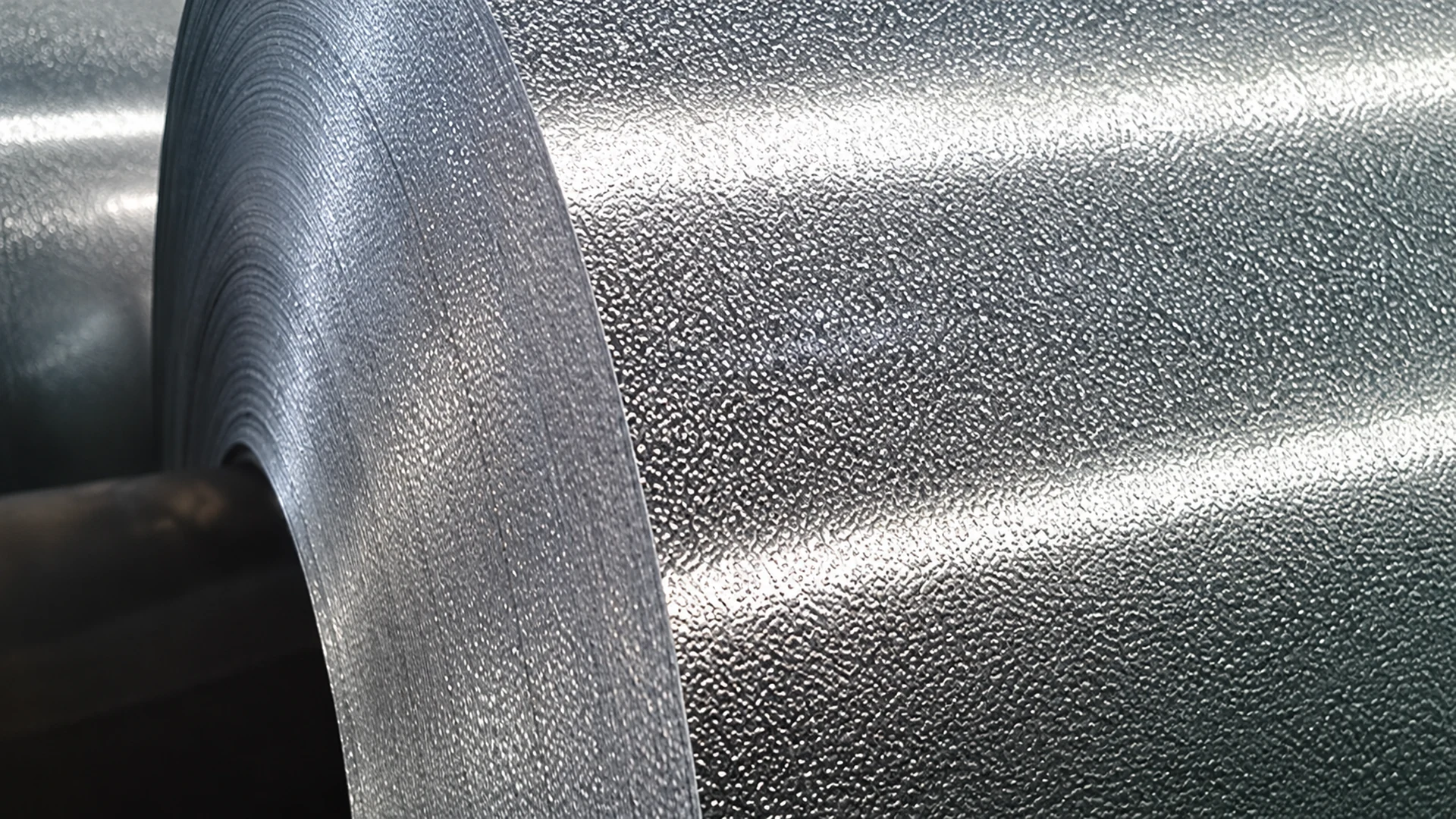
Stucco embossed aluminum sheet changes the surface appearance of insulation jacketing. Its irregular texture makes minor handling marks less conspicuous and reduces glare compared with a smooth finish. Those advantages can matter on visible pipework, equipment covers and other exposed surfaces.
The jacket protects the insulation beneath it. The embossing pattern does not establish a thermal resistance value, specify a moisture barrier or determine whether a cold-service assembly controls water vapor. A sound selection starts with the service conditions, then considers surface finish, alloy, temper, metal thickness and any required backing. Understanding which choice controls which outcome helps contractors and fabricators select a sheet that suits both the appearance requirements and the assembly it will cover.
Where the Aluminum Jacket Fits
In mechanical insulation, aluminum jacketing forms the protective exterior around insulation on pipes, vessels and equipment. Johns Manville’s Aluminum Roll Jacketing product description identifies protection against physical damage, ultraviolet exposure, water and corrosive environments as its purpose. The degree of protection achieved in service also depends on the selected material and installation details.
The insulation underneath provides the thermal resistance needed for the application. Its material, thickness and operating conditions govern the thermal design. A textured metal surface alone supplies none of the information needed to establish that performance.
This distinction matters when a catalog uses a broad term such as “aluminum insulation sheet.” The item offered may be an external covering, a facing for an insulated panel or part of a larger assembly. Identify the component before comparing products. TOP METAL’s embossed aluminum sheet range includes material associated with protective jacketing and equipment covers, making the sheet itself the relevant starting point for this application.
How Stucco and Smooth Finishes Compare
Stucco embossing creates an irregular texture, often described as an orange peel pattern. Its small changes in surface angle spread reflections in different directions, making the sheet look less mirror-like. The pattern itself does not define the alloy, temper or backing.
Johns Manville’s September 2025 Aluminum Roll Jacketing data sheet provides a practical comparison of its smooth and stucco finishes:
| Selection factor | Stucco embossed finish | Smooth finish |
|---|---|---|
| Reflected light | Breaks up the conspicuous reflection associated with a smooth surface | Can produce more conspicuous, mirror-like reflections |
| Minor scratches and handling marks | Texture helps make small imperfections less noticeable | Surface damage is more readily visible |
| Visual character | An irregular, textured appearance | A plain, continuous metallic appearance |
| Rainwater shedding | No drainage advantage should be assumed from the texture | Identified by JM as the better rain-shedding finish |
JM also describes a small increase in rigidity for its stucco finish. That observation helps explain why texture can affect handling, but provides no universal strength increase or basis for reducing the specified metal thickness.
For a visible installation, compare samples under the expected lighting and viewing distance. Use comparable alloys and metal thicknesses so that a difference in material is not mistaken for a finish effect. Where new jacketing extends an existing installation, include the adjacent covering in the comparison.
Inspect an appropriately formed sample where the sheet will wrap around equipment. Concealing a small mark is an appearance benefit; a pronounced dent or damaged joint still warrants inspection.
Separate Surface Texture from Moisture and Vapor Control
A stucco pattern describes the outer metal surface. A backside moisture barrier is an additional product feature with its own material and performance requirements. A vapor retarder addresses water vapor movement through the insulation assembly. These terms should remain distinct when reading a specification.
| Feature or component | Relevant function | What to establish |
|---|---|---|
| Stucco texture | Alters surface appearance and the visibility of minor marks | The agreed finish and reference sample |
| Backside moisture barrier | Provides a specified protective lining on the inner face of the metal | The lining material, intended function and product data |
| Vapor retarder and its joints | Resists water vapor movement into the insulation system | Required performance and continuity across the assembly |
Johns Manville describes the inner polyfilm lining on its aluminum jacketing as helping protect against corrosion. Its separate Saranex CX Vapor Retarder Film literature addresses resistance to moisture vapor entering insulation in low-temperature applications. These descriptions show why two products can both mention moisture while serving different purposes.
For cold service, evaluate vapor control at joints, terminations and other transitions as part of the design. A sheet with a lining does not, by itself, establish the performance of all those connections. Some specified assemblies may combine functions in a particular component; that conclusion must follow the product data and system design.
The product specification should state whether a backing is supplied and, if so, identify its material, intended function and relevant performance data.
Specify the Metal Beneath the Pattern
Base-metal thickness and embossed profile height describe different dimensions. Base-metal thickness concerns the metal itself; the profile describes the relief produced by embossing. A measurement spanning a textured contour can therefore differ from the underlying metal thickness. State the dimension being controlled and its measurement method, together with the tolerance.
When comparing replacement sheets, use the stated metal thickness and its tolerance; visual bulk or overall profile height can conceal a different base gauge.
Match Alloy and Temper to Fabrication
Specify the alloy and temper together. The alloy identifies the material composition, while the temper describes its processing condition. Different combinations affect strength and formability even when the sheets carry a similar pattern. Materials such as 1060 and 3003 should be evaluated against the application requirements rather than treated as interchangeable because both can be embossed.
For a fabricated cover, select the alloy and temper to suit the required bends, exposure and handling demands.
Define the Delivered Form and Dimensions
Stucco embossed aluminum coil and cut sheet serve different fabrication arrangements. Specify the delivered form, usable width, sheet length or coil requirements, and relevant tolerances separately from the pattern description.
JM’s jacketing guidance considers the insulated assembly’s outside diameter and the support provided by the insulation when selecting thickness. Use the actual geometry and project specification to choose the gauge for the cover.
Read ASTM and EN Standards Within Their Scope
A useful standards reference identifies both the document and the material or assembly it addresses. A general statement such as “ASTM/EN compliant” leaves the reader unable to determine what has been evaluated.
The following documents address different parts of a material specification. The editions shown were current in October 2026:
| Standard | What it addresses | Boundary relevant to stucco jacketing |
|---|---|---|
| ASTM C1729-26 | Physical requirements for aluminum insulation jacketing, using inch-pound units | A material specification; it does not establish the performance of the installed insulation system |
| ASTM C1729M-26 | Aluminum insulation jacketing requirements, using SI units | Specify the appropriate edition and unit system; the same distinction between material and installed-system performance applies |
| EN 573-3:2026 | Chemical composition limits and product forms for wrought aluminum and aluminum alloys | Composition information alone does not establish the jacket’s backing, appearance or system performance |
| EN 485-2:2016+A1:2018 | Mechanical properties of sheet, strip and plate for general engineering applications | Its published scope excludes special products including embossed, corrugated and painted sheet and strip |
The EN 485-2 exclusion deserves particular attention. A reference to this part should not automatically be presented as a general conformity claim for finished stucco embossed jacketing. If a document addresses the base sheet before processing, identify that material stage clearly and establish the requirements for the delivered product separately. This limitation also should not be extended to every part of the EN 485 series.
ASTM and European alloy or sheet standards describe different subjects; they are not interchangeable approvals for an insulation installation. For acceptance, use the edition and requirements specified in the project documents. A newer catalog edition does not automatically change an existing contractual requirement.
Apply the Choice to the Installation
The following hypothetical examples show how the same finish can enter two different selection decisions.
Example 1: A Visible Equipment Cover
Imagine a cover over insulated equipment beside a regularly used access route. The project places a high value on avoiding distracting reflections and keeping minor handling marks inconspicuous. Comparing stucco and smooth samples under representative lighting is a sensible first step.
The selected texture then needs to be matched to the required alloy, temper, metal thickness and formed geometry. If the cover is outdoors, review water-shedding details as well. An attractive texture does not settle the joint arrangement or the material’s suitability for the exposure.
Example 2: A Cold-Service Pipe Assembly
Consider a pipe operating below ambient temperature in a humid area. Begin with the specified insulation and vapor-control construction, including its transitions and joints. Establish the external protection and backing requirements from that design, then compare surface finishes for the installation’s appearance and handling needs.
Stucco may still be an appropriate choice, but selecting it cannot resolve an incomplete vapor-control specification. The decision needs a defined assembly and a matching jacket construction.
TOP METAL lists stucco embossed aluminum sheet within its aluminum sheet range. To discuss a particular cover or jacketing requirement, send TOP METAL the sheet specification and application details, including alloy, temper, base-metal thickness, dimensions and any specified backing.