
Aluminum Sheet Gauge Chart: Thickness in Inches and mm
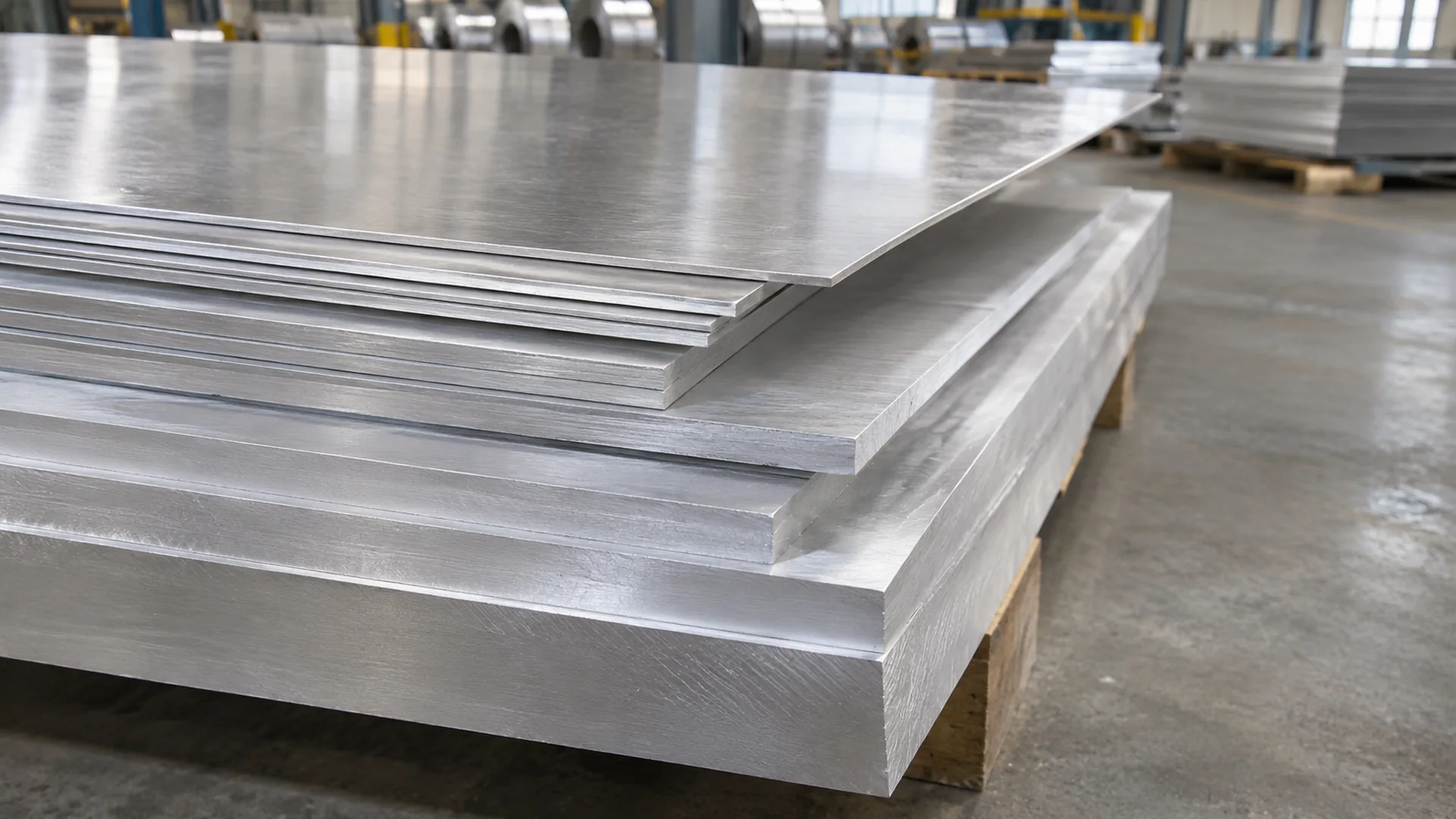
Aluminum sheet gauge numbers describe nominal thickness only when the gauge system and metal are identified. On a commonly used Brown & Sharpe (B&S) nonferrous gauge chart, 16-gauge aluminum is 0.0508 in (1.290 mm), while 18-gauge aluminum is 0.0403 in (1.024 mm). A 1/8-inch aluminum sheet is exactly 0.125 in, or 3.175 mm; it is not exactly 8 gauge. The B&S 8-gauge nominal value is 0.1285 in (3.264 mm). For fabrication drawings and cross-border orders, a stated decimal thickness with an agreed tolerance is more reliable than a gauge number alone.
TOP METAL lists commercial aluminum sheet in several alloy and temper options. Buyers comparing quotations should confirm the actual thickness being offered rather than assume a gauge conversion guarantees a stocked mill size.
Aluminum Sheet Gauge Chart: Inches and Millimeters
Common Aluminum Sheet Gauge Sizes
The following reference follows the Brown & Sharpe nonferrous gauge series, often used for aluminum, brass and copper. Values are nominal chart equivalents, not mill production tolerances. Millimeters are calculated from inches using 25.4 mm per inch and rounded to three decimal places.
| B&S gauge | Nominal thickness (in) | Nominal thickness (mm) |
|---|---|---|
| 8 | 0.1285 | 3.264 |
| 10 | 0.1019 | 2.588 |
| 12 | 0.0808 | 2.052 |
| 14 | 0.0641 | 1.628 |
| 16 | 0.0508 | 1.290 |
| 18 | 0.0403 | 1.024 |
| 20 | 0.0320 | 0.813 |
| 22 | 0.0253 | 0.643 |
| 24 | 0.0201 | 0.511 |
| 26 | 0.0159 | 0.404 |
How to Read the Gauge Chart
Read the number against the aluminum column, not against an unlabeled online gauge converter. Within the B&S series, a smaller number corresponds to thicker material: 14 gauge is thicker than 16 gauge, and 16 gauge is thicker than 18 gauge. It does not follow that an aluminum supplier must deliver precisely the table thickness at every point across a sheet. An order needs a nominal dimension and a separate, applicable tolerance.
For example, 16-gauge aluminum converts to 1.29032 mm before rounding. Writing “1.3 mm” may be acceptable for a rough discussion, but it is not an automatic substitution for a drawing that specifies 1.290 mm or 1.30 mm with its own tolerance. If a component fits into a narrow slot or mates with a formed flange, these small differences can matter.
What Does Gauge Mean for Aluminum Sheet?
Why Higher Gauge Numbers Indicate Thinner Sheets
Gauge is an inherited numbering convention rather than a universal SI measurement. In the B&S progression, each successive gauge number represents a smaller nominal thickness. Therefore “higher gauge” means thinner sheet within that series, not a superior grade, a stronger alloy or better surface finish. Gauge does not identify 3003 versus 5052, annealed versus work-hardened material, or any test requirement.
Is the Gauge System the Same for Every Metal?
No. Commercial mild steel sheet is commonly referenced using the Manufacturers’ Standard Gauge, whose numbers differ from nonferrous B&S values. Stainless steel also has its own customary thickness conventions. A procurement specification reading only “16 gauge sheet” leaves both the material and actual thickness ambiguous. Gauge becomes useful only after the metal and reference convention are agreed.
What Gauge Is 1/8-Inch Aluminum Sheet?
Convert 1/8 Inch to Millimeters
The conversion is direct: 1/8 × 25.4 = 3.175 mm. Because 1/8 inch is exactly 0.125 inch, this result is not an approximate gauge conversion. It is an exact unit conversion of the stated fraction.
Is 1/8-Inch Aluminum Sheet the Same as 8 Gauge?
Not exactly. B&S 8 gauge is nominally 0.1285 inch, equivalent to 3.2639 mm. Subtracting 0.125 inch gives a nominal difference of 0.0035 inch (0.0889 mm). The nearest common B&S designation is therefore not interchangeable with the actual 1/8-inch specification without confirmation. That difference may be harmless in one application and unacceptable in another; its significance depends on the drawing and permitted thickness variation.
What Should Buyers Specify Instead?
If the drawing says 0.125 inch, request 0.125-inch (3.175-mm) nominal aluminum sheet, with alloy, temper and thickness tolerance stated. If a seller quotes 8-gauge stock instead, ask for its decimal nominal thickness and tolerance before accepting the substitution. TOP METAL’s online aluminum sheet listing includes a broad catalog thickness range; that listing alone does not establish availability of every fractional or gauge size.
How Thick Are 14, 16, 18, and 22 Gauge Aluminum Sheets?
14 and 16 Gauge Aluminum Sheet Thickness
On the B&S aluminum chart, 14 gauge is 0.0641 in (1.628 mm) and 16 gauge is 0.0508 in (1.290 mm). If a purchase request says “1.6 mm aluminum,” do not silently change it to “14 gauge”: the numbers are close, but the specified nominal dimensions differ. The same caution applies to 1.3 mm and 16 gauge.
18, 22, and 24 Gauge Aluminum Sheet Thickness
18 gauge is 0.0403 in (1.024 mm), 22 gauge is 0.0253 in (0.643 mm), and 24 gauge is 0.0201 in (0.511 mm). These numbers answer common “how thick is” searches, but they do not reveal an individual sheet’s temper, surface condition or measured tolerance. Thin stock also deserves attention to handling, protective film and edge quality where those details matter to fabrication.
How to Compare Two Gauge Sizes Correctly
Subtract thicknesses, not gauge numbers. For example, 16-gauge aluminum (0.0508 in) minus 18-gauge aluminum (0.0403 in) equals 0.0105 in, or 0.2667 mm. That difference describes nominal dimensions only. It is not a valid calculation of load capacity, minimum bend radius or the deflection of an assembled panel: those require geometry, temper and loading conditions as well.
Aluminum Gauge vs. Steel Gauge: Why the Difference Matters
Same Gauge Number, Different Thickness
The table below compares the nonferrous B&S aluminum series with customary uncoated mild-steel sheet gauge equivalents. Identical numbers do not describe identical thicknesses.
| Gauge | Aluminum, B&S (in) | Uncoated steel, MSG (in) |
|---|---|---|
| 14 | 0.0641 | 0.0747 |
| 16 | 0.0508 | 0.0598 |
| 18 | 0.0403 | 0.0478 |
Why a Gauge-Only RFQ Can Cause Specification Errors
Consider a hypothetical parts buyer sending “16 gauge sheet, 1,000 × 2,000 mm” to two distributors. One quotation assumes aluminum at 0.0508 inch; the other interprets the number as uncoated steel at 0.0598 inch. Even before alloy and price are considered, the proposals describe different materials and thicknesses. A buyer comparing them on unit price alone would not be comparing equivalent items. State the metal and decimal nominal thickness first, then clarify gauge if it is useful for local shop terminology.
How to Specify Aluminum Sheet Thickness for an Industrial Order
Specify Nominal Thickness and Tolerance
The nominal thickness is the dimension requested. Thickness tolerance identifies the permitted deviation under the agreed product specification. Actual measured thickness is the result at a specified measurement position, not another name for nominal thickness. The mill standard may account for product form, alloy family, width and thickness range, so tolerance cannot reliably be inferred from the gauge chart. For aluminum sheet and plate, an applicable specification such as ASTM B209/B209M may form part of the order, provided its edition and coverage are agreed.
Include Alloy, Temper, and Sheet Dimensions
For a fabricated enclosure, “16 gauge aluminum” is too little information. A usable request states the alloy and temper, nominal thickness, width and length, required tolerance, finish and quantity. The following is an illustrative RFQ, not a statement of TOP METAL’s stock or minimum order quantity:
| RFQ field | Illustrative entry |
|---|---|
| Material | Aluminum sheet |
| Alloy / temper | 5052-H32 |
| Nominal thickness | 1.50 mm |
| Width × length | 1000 × 2000 mm |
| Thickness tolerance | Per agreed applicable specification |
| Surface | Mill finish |
| Quantity | 500 sheets |
| Documents | Specify required material inspection documentation |
Verify the Applicable Material Standard
Standard references matter most when sheet dimensions affect downstream forming or fit. Confirm whether the project uses mill-supplied sheet or further-processed blanks, what tolerances are required at receipt, and how material identity will be documented. TOP METAL lists multiple alloy families and cut-to-size options, but the exact combination, standard, inspection documents and quantity must be checked for the proposed order. To discuss a specific requirement, send the dimensions and intended fabrication use through the TOP METAL quotation page.
Frequently Asked Questions About Aluminum Sheet Gauge
How thick is 16-gauge aluminum sheet in millimeters?
Under the Brown & Sharpe nonferrous series, 16-gauge aluminum is nominally 1.290 mm (0.0508 inch). Verify the reference gauge system and actual ordering thickness before using the value in a fabrication drawing.
How thick is 18-gauge aluminum sheet in inches?
The B&S nominal equivalent is 0.0403 inch, approximately 1.024 mm. The value is a gauge-table conversion, not a specified production tolerance.
What gauge is 1/8-inch aluminum sheet?
One-eighth inch equals 0.125 inch, or exactly 3.175 mm. The nearest common B&S entry is 8 gauge at 0.1285 inch, but the two nominal thicknesses are not identical.
Is aluminum gauge the same as steel gauge?
No. At 16 gauge, a common aluminum B&S table gives 0.0508 inch, while uncoated steel MSG gives 0.0598 inch. Specify both material and thickness in an RFQ.
Is it better to order aluminum sheet by gauge or millimeters?
Use a specified numerical thickness in millimeters or decimal inches, together with the applicable tolerance. Gauge can remain a secondary reference after both parties agree on its convention.
Bottom line: gauge charts are useful for quick comparisons, but a precise aluminum sheet order needs alloy, temper, actual nominal thickness and tolerance. TOP METAL buyers can refer to the relevant sheet product information and provide those details when requesting a quotation.