
Anodized Aluminum Sheet Thickness: Base Metal vs Coating
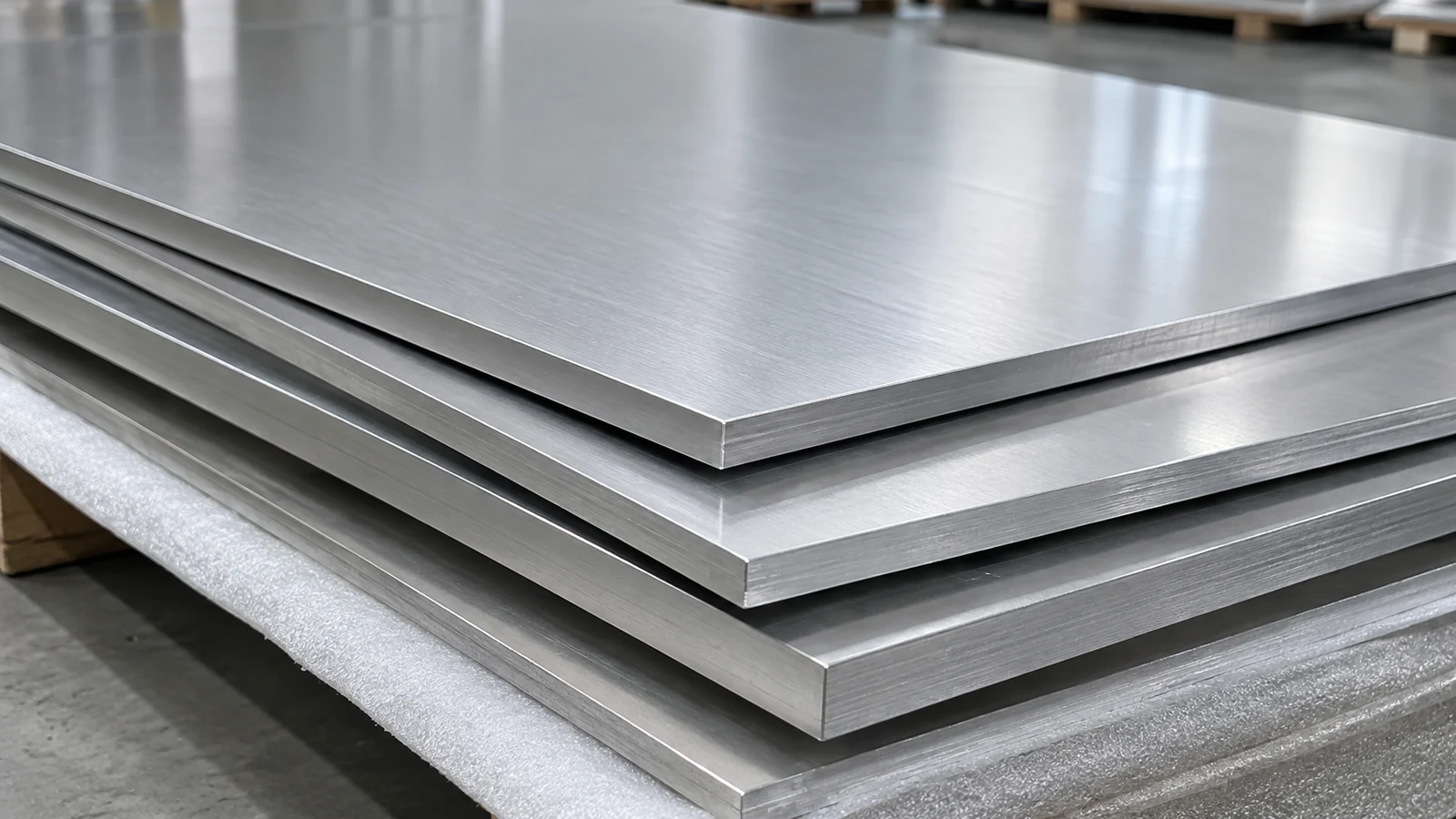
Anodized aluminum sheet thickness can mean two different things: the thickness of the aluminum substrate and the thickness of the anodic oxide layer. They are not interchangeable. Substrate thickness determines the basic metal section, while coating thickness describes an electrochemically formed surface layer. For close-fitting parts, buyers may also need to state finished dimensions after processing. Because anodizing converts part of the aluminum surface into oxide, the dimensional change cannot simply be treated as two fully added paint layers.
TOP METAL lists anodized aluminum sheet and coil products in several alloys and surface finishes. The right specification should distinguish what is being purchased as metal stock, what surface treatment is required and what will be measured on delivery. The following guide explains those separate requirements without assuming that one finish, coating thickness or inspection method applies to the entire product range.
Sheet Thickness and Anodic Coating Thickness Are Different Measurements
When a quotation says “1 mm anodized aluminum sheet,” it may identify the nominal sheet thickness but not the thickness of the anodic film. A complete specification needs both fields where the coating matters. The finished part may also have a separate dimensional acceptance requirement.
| Specification item | What it describes | Typical reporting unit | Question to confirm |
|---|---|---|---|
| Substrate thickness | Metal stock or base-sheet section | mm | Is the stated value for incoming material or the specified final metal section? |
| Anodic coating thickness | Thickness of the oxide film formed by anodizing | µm | Which surfaces, locations, class and test basis apply? |
| Finished dimension | Actual size after required processing | mm or drawing unit | At which manufacturing stage is it inspected? |
| Tolerance | Permitted variation of the specified property | Drawing/standard-specific | Which material and finish standards govern acceptance? |
For reference, 1 mm equals 1,000 µm. The conversion does not make substrate thickness and anodic film thickness equivalent properties. A film-thickness report cannot replace a base-sheet dimensional inspection, and a micrometer reading on finished material cannot by itself prove the oxide layer’s thickness.
Does Anodizing Increase the Finished Thickness of Aluminum?
Anodizing can change the final dimensions of an aluminum part, but the buildup at the external surface is not necessarily the same as the full measured oxide-film thickness. The process forms oxide by conversion of aluminum at the surface; part of the film develops into the original metal and part may extend outward. The actual dimensional response depends on the process and materials used.
That distinction matters for precision bores, fitted edges, sliding features and components assembled with limited clearance. It would be incorrect to assume that a 20 µm anodic coating always adds exactly 20 µm to each external face, or that a sheet’s finished overall thickness automatically increases by twice the stated film thickness.
If dimensional change matters, the drawing should specify whether critical dimensions apply before or after anodizing and whether surfaces will be masked. The required dimensional tolerance, film requirements and actual finishing route should be reviewed together rather than converted with an unexplained universal ratio.
How Much Anodic Coating Thickness Does an Application Need?
There is no single ideal anodic coating thickness for every sheet application. The correct requirement comes from function and the standard or project specification being used, not from the assumption that a thicker layer always means a better product.
Decorative and General-Purpose Finishes
For visible panels, signs or consumer-facing parts, appearance, uniformity, color, sealing and handling requirements may be important alongside coating thickness. A nominal number alone does not control gloss, shade variation or visible defects.
Architectural Applications
Architectural finishes may use coating classes or exposure-based requirements in an applicable regional system. The intended service environment, appearance requirement and adopted specification should determine the requested class. A general article should not assign one film thickness to all indoor, exterior or coastal installations.
Hard Anodized Finishes
Hard anodizing may involve different surface and dimensional requirements from a decorative finish. The required coating category, wear-related tests and compatibility with the underlying alloy should be stated where they matter. Neither a film-thickness number nor the word “hard” independently proves the wear performance of a completed part.
TOP METAL displays anodized aluminum sheet and coil product options. Any coating class, target thickness and acceptance method for a particular order should be confirmed against the specific product and buyer specification; a product-family page is not evidence of one guaranteed thickness across all alloys.
Why Alloy and Surface Preparation Matter
Anodic appearance depends on more than the nominal coating thickness. The alloy, incoming surface quality, cleaning, mechanical preparation and actual finishing process can influence the result. Two sheets with the same specified oxide thickness need not have identical reflectivity, color or visual texture.
For example, a polished decorative panel has different surface expectations from an ordinary brushed or mill-finish sheet. TOP METAL’s 1050 high-reflective mirror-polished anodized aluminum sheet is a relevant product example, but the page should not be used to infer that every anodized product achieves the same appearance or uses the same treatment conditions.
Where appearance is critical, a buyer can identify the visible faces and request an approved reference sample or another agreed acceptance basis. The sample should have a clear revision and product context so that color, gloss and surface defects are not judged by an unrelated photograph.
Should Aluminum Sheet Be Fabricated Before or After Anodizing?
Both sequences are used in appropriate manufacturing contexts, but they lead to different questions. Cutting a pre-anodized sheet can expose fresh metal at the cut edge. Bending or punching after finishing may create local appearance or film-condition concerns depending on the material, bend severity and finish.
Fabricating first and then anodizing can allow the required exposed surfaces to be finished in the intended process, but introduces its own considerations: racking, contact marks, masking, shape, surface preparation and dimensional control.
| Sequence | Potential advantage | What to verify |
|---|---|---|
| Use pre-anodized sheet, then cut or form | Convenient starting stock for certain fabrication routes | Exposed edges, appearance after forming and protection of finished faces |
| Cut/form first, then anodize | Processing can address the defined finished-part surfaces | Racking, masking, distortion, finished dimensions and appearance |
Neither sequence should be treated as universally superior. The customer drawing, end-use conditions and supplier’s verified process route decide which is appropriate.
How Should Substrate and Coating Thickness Be Inspected?
Inspection starts by naming the characteristic being measured. Substrate thickness, anodic film thickness and finished overall dimensions require different measurement planning even when all three are relevant to the same sheet.
- Substrate: identify the material standard, nominal thickness, tolerance and agreed inspection location.
- Anodic film: identify the applicable finish specification, coating-thickness measurement method and sampling locations.
- Finished part: identify critical assembly dimensions and whether acceptance applies after finishing.
- Appearance: agree separately on color, gloss, scratches and permitted visual variation.
- Documentation: specify which inspection results, material records or certificates are contractually required.
Different standards and methods may use different terminology or evaluation rules. The buyer should reference the applicable edition in the contract and should not assume that a generic “anodized thickness” note supplies every necessary acceptance criterion.
What Should Buyers Put on the Drawing and RFQ?
For anodized sheet, procurement details should make the base material and surface finish separately traceable. A useful specification handoff includes:
- Aluminum alloy and temper.
- Substrate nominal thickness and tolerance.
- Sheet length, width and required quantity.
- Anodizing type or finish category and the governing specification.
- Required oxide-film thickness or class where relevant.
- Treatment on one side, both sides, edges or selected faces.
- Appearance, color and approved sample criteria if applicable.
- Cutting, punching or forming sequence and edge condition.
- Critical finished-part dimensions after treatment.
- Inspection locations, method and documentation requirements.
- Protection film, packing and handling conditions.
TOP METAL lists anodized sheet options and other aluminum sheet products. To compare a suitable offer, request an anodized aluminum sheet quotation with the alloy, metal thickness, finish requirement, drawing or sample, quantities and intended application. The product-specific processing route and inspection scope can then be confirmed rather than presumed.
For a precise anodized sheet specification, keep three questions separate: How thick is the metal, how thick is the anodic film, and what final dimensions must the supplied part meet? Clear answers make quotations and inspections more comparable.