Buy Aluminum Sheet Selection Guide | SUZHOU TOP METAL MATERIALS CO.,LIMITED

Buying Aluminum Sheet for Your Application

Buying aluminum sheet for a formed cover, machined part or visible panel starts with the job it must do. Alloy and temper affect forming and strength; thickness, flatness and surface condition affect whether the delivered sheet works in your process.

Related Products

Match sheet properties to the part

Sheet selection

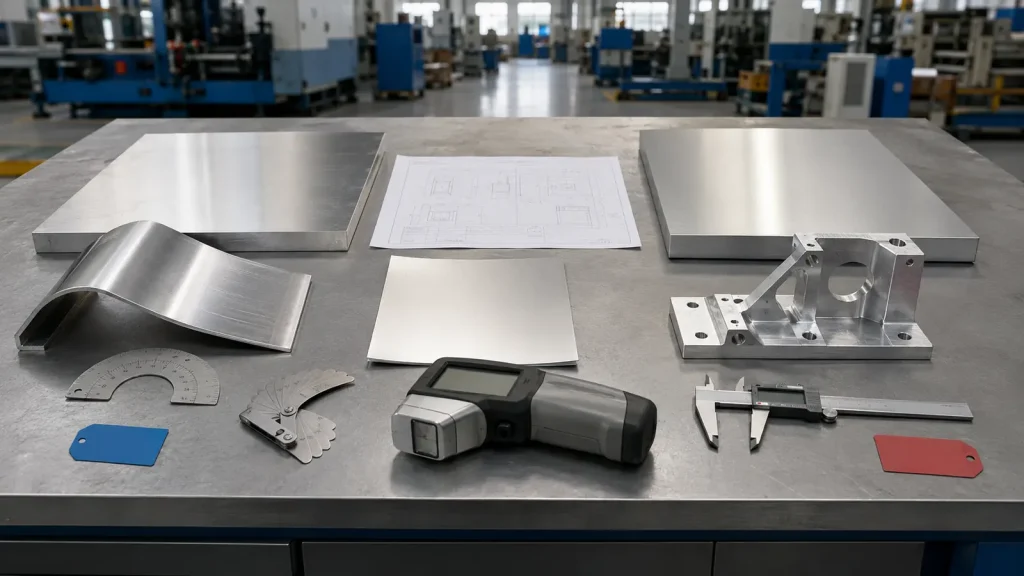
Compare aluminum sheet by alloy and temper first, then check size, tolerance and surface condition against the fabrication method and finished part.

Criterion What To Check Why It Matters Buyer Tip
Alloy and temper Match the specified alloy and temper to the forming, machining or strength requirements on the drawing. A sheet that meets the size requirement may still crack during forming or lack the needed strength. Ask: Can you quote the exact alloy and temper specified, rather than a substitute?
Thickness and flatness State the nominal thickness, acceptable tolerance and any flatness requirement. Variation can affect fit, cutting and the appearance of finished panels. Ask: Which thickness and flatness tolerances can you confirm for this order?
Sheet size and cut edges Confirm the required length and width, size tolerances, and whether edges must be trimmed or deburred. Unclear cut-size requirements can leave extra work before fabrication. Ask: Will the quoted sheets arrive at the required finished size?
Surface condition Specify the visible face, acceptable marks and any intended anodizing, painting or other finishing. Surface defects that do not affect fabrication can still matter on exposed parts. Ask: What surface condition and protective packaging can you confirm?

Decide on temper, tolerances and finish

The same alloy can behave differently in different tempers. A softer temper may suit tight bends, while a harder temper may better suit a part that needs to hold its shape but can be less forgiving during forming. If a drawing calls for 6061 sheet, confirm the temper rather than treating “6061” as a complete specification.

Also distinguish mill-finish sheet from material intended for a visible finish. If the sheet will be anodized, painted or left exposed, agree on acceptable surface marks and protective handling before ordering—not after fabrication reveals them.

Start with the operation: bending, stamping, machining or simple cutting. Share the bend geometry or part drawing when forming is involved. Choosing a temper for strength alone can leave a fabricator with sheet that cracks at a required bend.

Specify thickness and cut size alongside the tolerances that matter to the part. For a large panel, flatness may matter as much as thickness; for a close-fitting component, cut-size accuracy may take priority. State which dimensions are critical instead of applying tight tolerances everywhere.

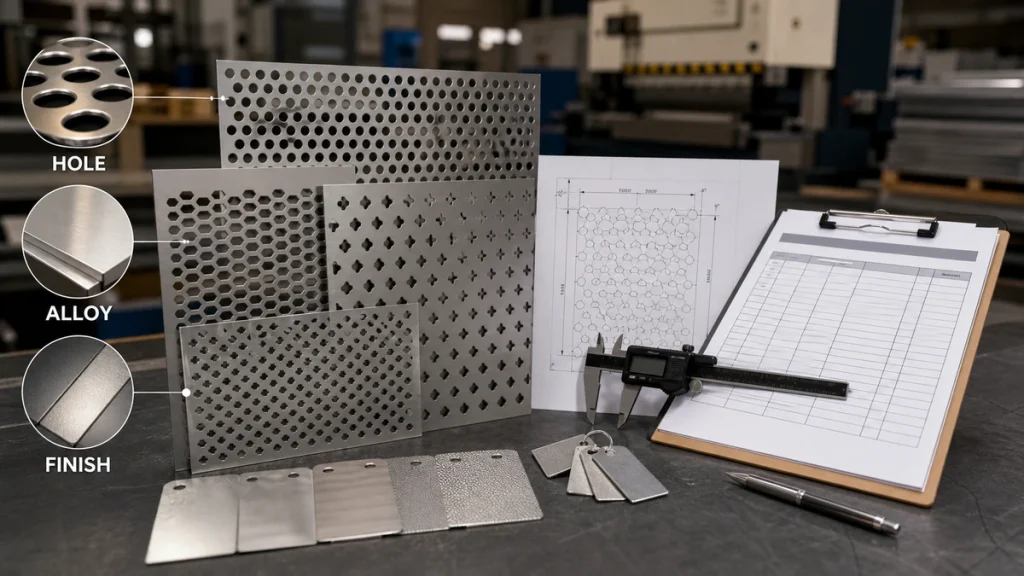
Match the surface requirement to the application. A concealed bracket may accept handling marks that would be unsuitable on a decorative panel. For perforated or prefinished sheet, provide the hole layout or finish reference and identify which face will be visible.

Before placing an order, ask SUZHOU TOP METAL MATERIALS CO.,LIMITED to confirm the proposed alloy, temper, available size, finish and applicable tolerances against your drawing. If substitutions are acceptable, say which properties must remain unchanged.


Criteria Importance Description Example Options
Alloy and temper Critical when the part must be formed or meet a defined strength requirement. Compare the required fabrication steps and finished-part properties; an alloy designation without a temper leaves a consequential choice unresolved. A bent cover and a machined component may call for different tempers even if both drawings name 6061.
Sheet versus coil Matters most when the cutting or forming process determines how material is fed. Sheet arrives as individual pieces; coil suits continuous-feed processing but may require flattening before parts are made. A shop cutting occasional panels may prefer sheets, while a line feeding strip into a press may consider coil.
Surface condition Essential for visible parts; often less restrictive for concealed components. Define which face is visible and what marks are acceptable, especially if the material will be anodized, painted or used as received. An exposed cabinet face needs a clearer appearance requirement than an internal support.
Dimensions and flatness Important where panels must sit evenly or cut parts have little dimensional allowance. Compare thickness, cut-size and flatness requirements against the operation rather than specifying the tightest tolerance for every dimension. A broad panel may be more sensitive to flatness than a small blank that will be trimmed after cutting.

Blog Articles / Reviews

6061 0 Aluminum Sheet: What Should Buyers Verify?

6061 0 Aluminum Sheet: What Should Buyers Verify?

A request for 6061 0 aluminum sheet is a temper-specific purchasing question, not simply a request for generic 6061 sheet. That distinction matters when a buyer compares supplier quotations. TOP METAL…

Frequently Asked Questions

What should I consider for an outdoor panel?

Describe the exposure, the required appearance and how the panel will be attached. Alloy and finish both matter: a suitable finish can protect the visible surface, but it does not replace choosing sheet appropriate to the environment.

Should I order sheet or coil?

Sheet is a practical choice for discrete panels or parts cut to specified sizes. Coil may suit a process that continuously feeds and cuts material, but it requires equipment that can handle and flatten the strip to the standard your parts need.

Does a higher-strength temper always make a better part?

No. A temper that offers more strength may be less suitable for a tight bend. Check the fabrication steps and the properties the finished part needs rather than selecting by strength alone.

What should I clarify if the sheet will be cut into many parts?

Provide the part sizes, cutting method and any important edge or grain-direction requirements. Ask how the quoted sheet sizes and tolerances relate to your cutting plan so you can assess usable yield.

What should I request to verify the material received?

Ask what material identification and inspection documents can be supplied with the order, and confirm the alloy, temper and dimensions they will identify. Agree on those records before ordering if traceability matters to your production process.

Leave Your Message

Send your part drawing or intended use, required thickness and size, and any bend or visible-surface requirements so the proposed sheet can be checked against the job.