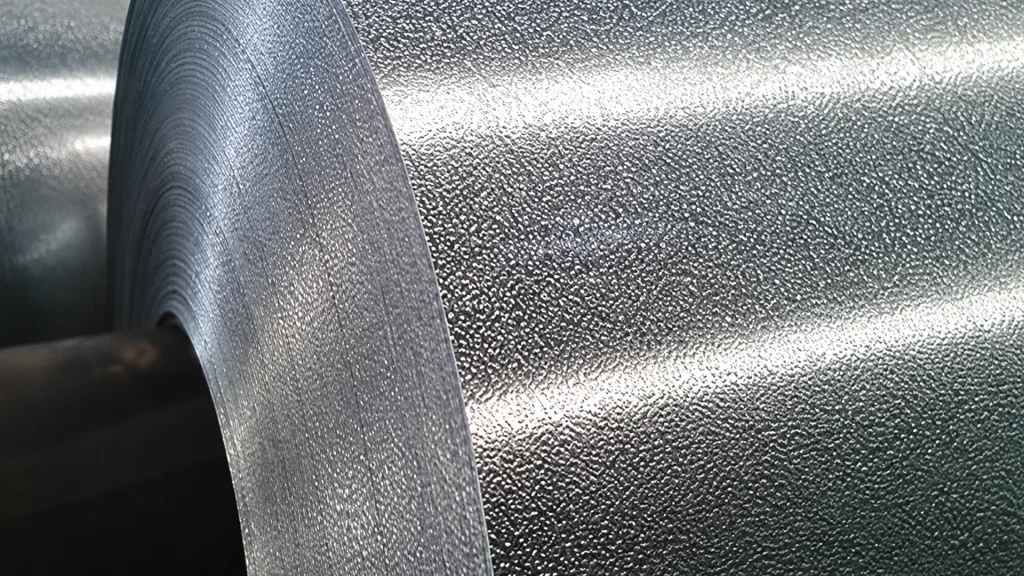
6063 Aluminum Sheet Selection Guide | SUZHOU TOP METAL MATERIALS CO.,LIMITED

Choosing 6063 Aluminum Sheet for Panels and Covers

For a 6063 aluminum sheet that will become a visible panel or enclosure, the main decision is whether its surface finish and forming behavior suit the finished part. Alloy 6063 is often chosen for its anodizing potential, but alloy alone does not determine appearance: temper, surface condition and finishing process also matter.

6063 is more commonly associated with extruded profiles than sheet. If your drawing calls for sheet, confirm that the offered material is sheet in the specified alloy and temper, rather than assuming a 6063 extrusion offering covers the job.

Related Products

China aluminum plate sheet

China aluminum plate sheet

We mainly produce 1000 Series aluminum sheet, 2000 Series aluminum sheet, 3000 Series aluminum sheet, 5000 Series aluminum sheet, 6000 Series aluminum sheet, 7000 Series aluminum sheet, 8000 Series al…

Read More
7475 T6 Aerospace aluminum plate sheet

7475 T6 Aerospace aluminum plate sheet

Aerospace aluminum is preferred because of high strength to weight ratio, ductility and resistance to corrosion. It is also non-magnetic. There is a wide range of variations in the compositions of alu…

Read More
Commercial grade Aluminum Sheet

Commercial grade Aluminum Sheet

Aluminum and aluminum alloys are gradually becoming strong members in various modern industries at present. In the meantime, high quality products of common aluminum alloys are now playing an importan…

Read More

Match 6063 sheet to the finished part

Material selection

Compare proposed sheet by alloy and temper, thickness, surface condition and the operations planned after delivery. Those details determine whether the material fits the part more reliably than the alloy number alone.

Criterion What To Check Why It Matters Buyer Tip
Temper and forming Confirm the temper on the material specification and compare it with the planned bends or machining. Temper changes strength and formability; the alloy designation alone does not establish how the sheet will behave. Will the sheet be bent after delivery, or used as a flat panel?
Thickness and flatness State the required thickness tolerance and flatness for the finished part, especially for large visible panels. A nominal thickness may be acceptable for a cover but unsuitable where panels must sit flush or fit a close assembly. Share the panel size and the gap or fit that matters most.
Visible surface and finishing Specify which face will be exposed and whether it will be anodized, painted or left unfinished; ask how the surface is protected in transit. Scratches and surface variation become more noticeable on decorative sheet, particularly after finishing. Can a finish sample be reviewed before committing to visible parts?
Cut size and edge condition Confirm sheet dimensions, cut-size tolerance and whether edges need deburring or further machining. An acceptable mill sheet may still need extra work before it fits a frame or can be handled safely. Send a part drawing rather than only a nominal sheet size.

Check temper, bends and visible surfaces

Should you specify 6063 instead of 5052 or 6061? Start with the operation that is hardest to change. For a visible anodized part, 6063 may be worth considering, provided the available sheet and its finish meet the appearance requirement. For a part with substantial bends, compare the proposed temper and bend requirements with 5052. Where higher strength drives the design, assess 6061 in the required temper rather than treating these alloys as interchangeable.

A mill finish is not a promise of a uniform anodized result. If panels must match, agree on an appearance sample and acceptable variation before committing to a batch.

Define the part first: flat panel, formed cover or machined component. Give the finished dimensions, sheet thickness and any critical flatness or edge requirements. A sheet that suits a flat panel may not suit a tight bend.

Specify alloy and temper together. Softer tempers generally allow more forming; harder tempers can make bending more restrictive. If the drawing includes bends, share the bend radius and direction so the proposed material can be checked against the fabrication plan.

Separate the base metal from the finish. State whether you need mill finish, a surface intended for anodizing, or finished anodized sheet. For visible parts, describe which face will show and whether adjacent panels must match; do not assume a finish name settles scratch limits or color variation.

Before approving a substitute or placing an order, ask which sheet standard and material documentation can be supplied for the proposed 6063 temper. If availability points toward another alloy, review the change against your forming, strength and appearance priorities—not just the thickness on the drawing.

Criteria Importance Description Example Options
Sheet versus extrusion Establish the material form before comparing offers. A 6063 extrusion offering does not establish availability of flat sheet for a cut panel. A cabinet panel calls for sheet; a frame member may call for an extruded profile.
Alloy and temper Compare both against the part's strength and forming needs. Temper changes forming behavior, and another alloy may better suit the operation that governs the design. Compare a proposed 6063 temper with 5052 for a formed cover or with 6061 where strength is the priority.
Surface and finishing sequence Critical when faces or cut edges remain visible. Mill finish, sheet intended for anodizing and pre-anodized sheet are not equivalent purchase descriptions. If cut edges will show, decide whether the part should be cut before anodizing.
Dimensions and tolerances Check against the finished assembly, not just the nominal sheet size. Thickness tolerance, flatness and edge condition can affect fit or the appearance of a large panel. A broad, exposed cover may need a stated flatness requirement.

Blog Articles / Reviews

6061 0 Aluminum Sheet: What Should Buyers Verify?

6061 0 Aluminum Sheet: What Should Buyers Verify?

A request for 6061 0 aluminum sheet is a temper-specific purchasing question, not simply a request for generic 6061 sheet. That distinction matters when a buyer compares supplier quotations. TOP METAL…

Frequently Asked Questions

Should panels be anodized before or after cutting?

Cutting pre-anodized sheet exposes bare metal at the edges. If visible edges need the same finish as the faces, discuss cutting and anodizing in the order that suits the finished part.

Can 6063 sheet be used for an outdoor panel?

It may be suitable, but the exposure and finish matter as much as the alloy choice. Describe the environment and cleaning conditions, then confirm that the proposed surface treatment meets the project's appearance and service requirements.

Does a T6 designation guarantee that two sheets will look alike after anodizing?

No. T6 identifies a temper, not a visual finish. Surface preparation, anodizing conditions and acceptable color variation need separate agreement for adjoining visible panels.

Can a 6063 profile be substituted for a specified sheet?

Not without reviewing the part design. A profile has a fixed cross-section, while sheet is selected for cutting and forming into a panel or cover; the two may also be supplied to different dimensional requirements.

What should I confirm before approving a purchase?

Ask whether the required alloy and temper are available as sheet in your dimensions, and what dimensional tolerances and material documentation apply. For visible parts, also agree on the inspection face and how surface defects will be judged.

Leave Your Message

Send your required thickness and dimensions, specified temper or forming details, and intended surface finish. Ask SUZHOU TOP METAL MATERIALS CO.,LIMITED whether it can supply sheet that meets those requirements.