
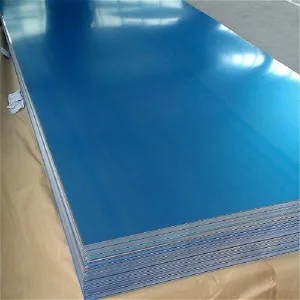
4017 aluminum sheet supplier aluminium checker plate factory
4017 aluminum sheet is a bright finish tread similar to 3003 grades. 4017 aluminium checker plate provides durability. Also referred to as Aluminum Diamond Plate, Aluminum…
Read MoreAluminum Checker Plate Sheet Selection Guide | SUZHOU TOP METAL MATERIALS CO.,LIMITED
Aluminum checker plate sheet is often specified for steps, walkways, vehicle floors and equipment covers where a raised surface is useful. The first decision is what the sheet must do: provide a patterned walking surface, cover an existing structure, or form part of a load-bearing assembly. That choice affects the base-metal thickness, alloy and temper you should request.
4017 aluminum sheet is a bright finish tread similar to 3003 grades. 4017 aluminium checker plate provides durability. Also referred to as Aluminum Diamond Plate, Aluminum…
Read More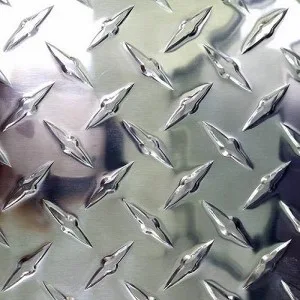
aluminum checker sheet is a high-cost modern material with many types. It is widely used in furniture, such as refrigerators, air conditioners, carriages, platforms, packaging…
Read More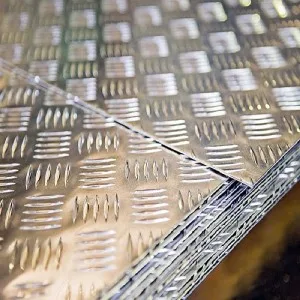
tool box fabrication aluminum brite plates 5 bars aluminum checker plate factory Aluminum checker sheet was commonly known as an aluminum checker plate and sometimes spelt aluminum chequer plate, an a…
Read More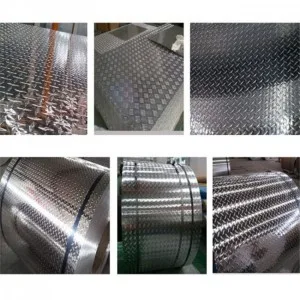
RuiYi Aluminum As one of the best decorative aluminium embossed plate manufacturers and suppliers can supply all types of checker plate, such as plate floor diamond, embossed tread plate, non-slip sta…
Read More
Deep Drawing Aluminum Sheet Circle 1050 1060 Aluminum Plate ASTM B209 Approved Deep drawing 1050 1060 ASTM B209 cookware use aluminium sheet circle Aluminum circle, as aluminum disc, is normally with …
Read More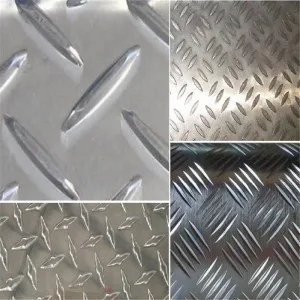
Checkered plates/tread aluminum sheet with distinct design and highly slip resistance can be easily configured into a variety of designs and patterns as per the client’s requirement. Aluminum checkere…
Read MoreSelection criteria
Compare checker plate options by base-metal thickness, alloy and temper, pattern, sheet size and finish. The right combination depends on the support beneath the plate and any forming or fitting required.
| Criterion | What To Check | Why It Matters | Buyer Tip |
|---|---|---|---|
| Tread pattern | Compare the raised pattern, its orientation and a sample or drawing. | Patterns differ in appearance and how they meet footwear or equipment; the pattern alone does not guarantee slip resistance. | Can you confirm the pattern and provide a sample for the intended use? |
| Base-metal thickness | Confirm whether the stated thickness excludes the raised tread. | The base metal, not the height over the tread, matters when assessing weight and support. | Is the quoted thickness measured on the flat area between the raised marks? |
| Alloy and temper | Match the specified alloy and temper to the required forming, exposure and service conditions. | A sheet suitable for bending may not be the best choice where stiffness or wear is the priority. | Which alloy and temper are you offering for this application? |
| Sheet size and cut direction | Verify finished length and width, tolerances, and tread direction after cutting. | A sheet can fit the opening yet leave the pattern running the wrong way. | Can you cut to the finished size with the tread oriented as shown on our drawing? |
| Surface finish | Confirm the supplied finish and whether exposed faces need protection during handling. | Surface marks can matter on visible panels, while a coating or treatment may change maintenance needs. | What finish will be supplied, and is protective film available if appearance matters? |
For checker plate, base-metal thickness and overall thickness are not the same measurement. The raised pattern adds height, so an overall-thickness figure alone may not tell you how much metal lies beneath the tread. Ask which thickness a quotation states, especially if the sheet must fit a recess, be formed, or carry a specified load.
The pattern can improve footing, but it does not establish a slip-resistance rating for every environment. If people will walk on the plate where water, oil or other contaminants are present, assess the finished surface for those conditions rather than relying on its appearance.
Start with the support beneath the sheet. A plate laid over a continuous floor has a different job from one spanning gaps between supports. For a load-bearing installation, provide the span, support arrangement and expected loads so the required thickness can be assessed; do not select it by pattern height alone.
Choose alloy and temper around the service conditions and fabrication work. If the plate needs bending, forming or welding, say so before settling on a material. Also describe exposure to moisture or cleaning chemicals, since the appropriate material and finish depend on where the plate will be used.
Check the pattern against the application. Tread shape and orientation can affect contact underfoot, appearance and how easily debris can be removed. If a directional pattern must run a particular way, show that orientation on a drawing.
Finally, specify finished length and width, base-metal thickness, quantity and any cutouts or edge requirements. A nominal sheet size may create waste or leave too little material for your layout. Send a drawing when the plate must fit existing equipment, and confirm the stated dimensions and tolerances before ordering.
| Criteria | Importance | Description | Example Options |
|---|---|---|---|
| Checker plate versus plain sheet | Decisive when the working surface must be flat or easy to wipe clean | A raised tread changes surface contact and cleaning; it does not replace a structural assessment. | A smooth equipment cover may suit plain sheet, while a walking surface may call for a patterned plate. |
| Base-metal thickness versus overall thickness | Essential for fit and material selection | The tread adds height above the base metal. State which measurement applies to a drawing or quotation. | A recessed panel needs a defined overall height as well as a specified base-metal thickness. |
| Alloy and temper | Important when forming, welding or exposure affects the choice | Different combinations suit different fabrication and service needs; a pattern name alone does not identify the material. | A bent cover and a flat floor insert may call for different material choices. |
| Pattern and orientation | Important for appearance, contact and part layout | Tread geometry and direction can affect how a panel fits and how its surface is maintained. | A set of adjacent panels may need the pattern aligned in the same direction. |
Related Options
For a vehicle floor panel, fit and support are more useful starting points than tread appearance alone: check the finished dimensions, mounting layout and base-metal thickness before deciding on a pattern.

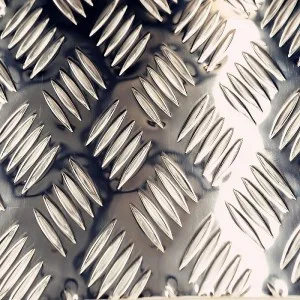





5052 aluminum sheet and plate are flat-rolled aluminum-magnesium products considered for parts that need formability, corrosion resistance and moderate strength. Choosing the material means specifying…
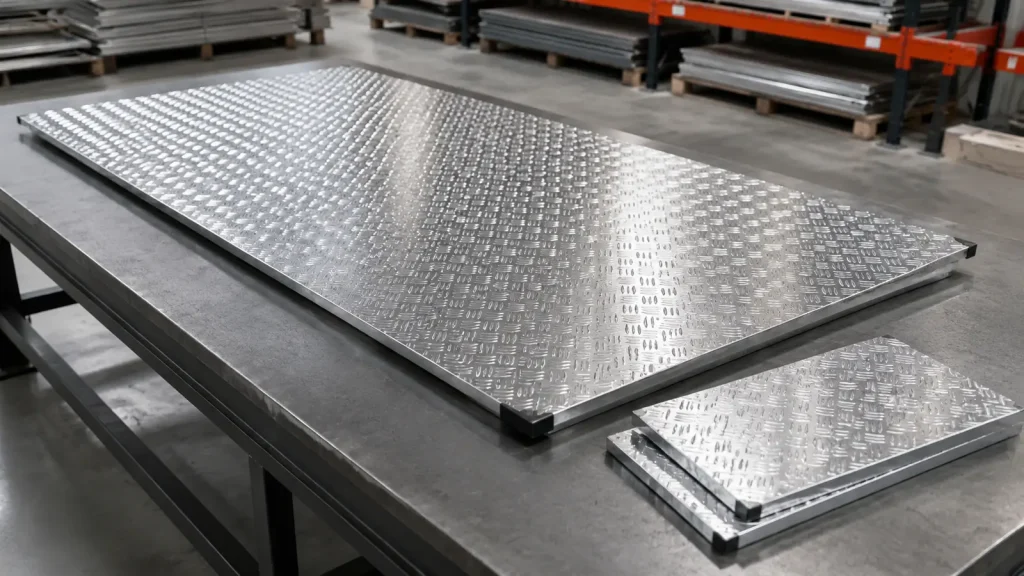
A 4×8 aluminum checkered plate order should define much more than nominal sheet length and width. Buyers need to state the alloy and temper, base-metal thickness, raised pattern, finished dimensi…

Perforated aluminum sheet can provide a ventilation path, but open-area percentage is not an airflow or pressure-drop rating. Begin with the hole pattern, calculate the openings available after solid …

When buyers search for a reflective aluminum sheet manufacturer, the key challenge is usually not finding a supplier website. The more important question is whether the supplier can provide a product …

A request for 6061 0 aluminum sheet is a temper-specific purchasing question, not simply a request for generic 6061 sheet. That distinction matters when a buyer compares supplier quotations. TOP METAL…

Anodized aluminum sheet thickness can mean two different things: the thickness of the aluminum substrate and the thickness of the anodic oxide layer. They are not interchangeable. Substrate thickness …
It may be, but exposure and maintenance matter alongside the raised pattern. Describe standing water, cleaning products and expected traffic so the alloy, finish and surface can be assessed for the installation.
Plain sheet can be easier to clean and fit where a flat surface is needed. Choose checker plate for the raised pattern, not because it is automatically stronger than plain sheet of the same base-metal thickness.
No. Footing also depends on footwear, surface wear and contaminants such as water or oil; a required slip-resistance result must be verified for the intended conditions.
That depends on the alloy, temper, thickness and bend geometry. Provide the bend location and required inside radius before ordering, because the raised pattern can affect tooling contact and the finished appearance.
Confirm whether the quoted size is the full sheet size or the finished cut size, and state any edge or surface requirements. If several parts will be cut from one sheet, send a layout so pattern direction and usable area are clear.
Tell SUZHOU TOP METAL MATERIALS CO.,LIMITED where the plate will be used, the finished dimensions and the base-metal thickness you need. Include a drawing if pattern direction or cutouts matter.