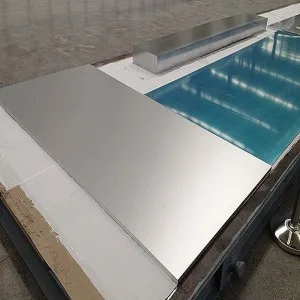
For repeated straight cuts, a sheet shear is often the simpler choice. A saw may suit smaller batches or varied blank sizes, while CNC routing or laser cutting can produce profiles and internal features. The trade-off is not just cut speed: edge burrs, surface marks, material waste and the amount of finishing needed can determine which process is economical.
If you need finished pieces rather than cutting equipment, ask about cut-to-size aluminum sheet instead. That distinction changes the inquiry from machine requirements to part dimensions, tolerances and edge condition.
Start with the material range: sheet thickness, alloy and temper, maximum sheet size, and the smallest part you expect to cut. A cutter that handles your largest sheet may still be a poor fit for narrow strips or small parts.
Define an acceptable cut edge. A part that will be welded or hidden may tolerate a different burr or surface appearance from an exposed panel. If the sheet is anodized, coated or supplied with protective film, ask how the proposed process affects that finish.
Match the cutting method to the work mix. Straight, repeated blanks favor a different setup from frequently changing shapes. For contoured work, include the drawing and identify holes, tight corners and critical dimensions rather than assuming that any CNC process will give the same result.
Before deciding, compare a sample cut against your drawing and inspection criteria. If you are contacting SUZHOU TOP METAL MATERIALS CO.,LIMITED, first confirm whether your inquiry is for cutting equipment or for aluminum sheets supplied cut to size.