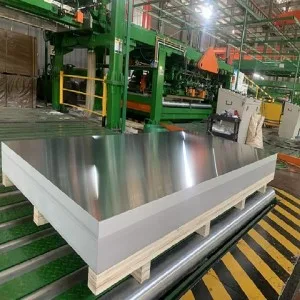
3004 Aluminum Sheet for Formed Parts | SUZHOU TOP METAL MATERIALS CO.,LIMITED

3004 Aluminum Sheet for Formed Parts

3004 aluminum sheet is a practical choice for formed panels, covers and containers that need more strength than 3003 while remaining workable. The main decision is not alloy alone: temper, thickness and the amount of forming determine whether the sheet will take the intended shape without unnecessary weight or cracking.

Related Products

China aluminum plate sheet

China aluminum plate sheet

We mainly produce 1000 Series aluminum sheet, 2000 Series aluminum sheet, 3000 Series aluminum sheet, 5000 Series aluminum sheet, 6000 Series aluminum sheet, 7000 Series aluminum sheet, 8000 Series al…

Read More
7475 T6 Aerospace aluminum plate sheet

7475 T6 Aerospace aluminum plate sheet

Aerospace aluminum is preferred because of high strength to weight ratio, ductility and resistance to corrosion. It is also non-magnetic. There is a wide range of variations in the compositions of alu…

Read More

Match 3004 sheet to the finished part

Selection criteria

Compare 3004 sheet options by temper, base-metal thickness, dimensions and surface condition. The right combination depends on how much the part will be formed and what its finished face must look like.

Criterion What To Check Why It Matters Buyer Tip
Temper and forming method Match the proposed temper to the bends, draws or roll-forming steps on your drawing. A harder temper may hold its shape better but can be less forgiving during forming. What temper do you recommend for our forming process?
Thickness and tolerance Specify the nominal sheet thickness and acceptable variation, then ask how thickness is verified. Thickness variation can affect fit, forming consistency and finished weight. Can you meet the thickness tolerance shown on our drawing?
Surface condition Define which face will be visible and whether the sheet will be painted, coated or left bare. Marks or inconsistent surface condition may matter more on an exposed panel than on a concealed part. What surface condition should we specify for the visible face?
Sheet size and flatness Compare available cut-sheet dimensions with your blank size and flatness requirements. Poor size fit increases scrap, while waviness can complicate cutting or assembly. Can you supply the blank size and flatness our process needs?
Alloy identification Ask how the supplied material will be identified as 3004 aluminum sheet and linked to its material documentation. Alloy and temper identification helps prevent substitutions that could change forming behavior. What documentation will identify the alloy and temper on delivery?

Temper, thickness and surface decisions

3004 is an aluminum-manganese-magnesium alloy that gains strength through cold working rather than heat treatment. An annealed temper is better suited to demanding forming; a harder temper offers more stiffness but allows less deformation. If the part needs tight bends or deep draws, confirm the temper against the forming method before choosing a thickness.

Compared with 3003, 3004 generally offers higher strength. If the design calls for substantially higher strength or a different corrosion-resistance profile, compare 5052 rather than assuming a thicker 3004 sheet is the best answer.

Start with the finished part. A shallow-formed panel and a deep-drawn container place different demands on the same sheet. Share a drawing or describe the bend radii, draw depth and forming direction so the temper can be assessed against the operation.

Specify the required metal thickness and its tolerance, not just a nominal gauge. Check whether your equipment needs cut sheets or coil-fed material, and state the usable width and length. For visible panels, also agree on flatness and acceptable surface marks before cutting or forming.

Choose the surface to match the next process. Bare sheet may be appropriate when it will be painted or otherwise finished later; coated or protected sheet needs a separate check for coating compatibility, appearance and handling. Do not treat coating thickness as part of the specified base-metal thickness.

For an inquiry to SUZHOU TOP METAL MATERIALS CO.,LIMITED, provide the part drawing or application, requested thickness and dimensions, and expected forming and finish. Ask which 3004 tempers and supply formats are available for those requirements.

Criteria Importance Description Example Options
Forming demand Decisive for drawn shapes and tight bends. Compare tempers against the most severe operation, not just the finished part’s desired strength. A deep-drawn container may need a more formable temper than a panel with shallow folds.
Panel stiffness Important where a broad sheet must resist deflection. Assess thickness and part geometry alongside temper; strength and stiffness are different properties. A broad cover may benefit more from a formed rib than from a harder temper alone.
Alloy alternative Worth reviewing when 3004 does not meet the part’s priorities. Compare the required forming, strength and service conditions before changing alloy. If corrosion exposure is the main concern, evaluate 5052 against the same part requirements.
Surface and dimensions Critical for visible parts and close-fitting assemblies. Define the acceptable face condition, flatness, size and thickness tolerance separately from the alloy designation. A painted cover needs a surface suitable for its finishing process and dimensions that fit the assembly.

Blog Articles / Reviews

6061 0 Aluminum Sheet: What Should Buyers Verify?

6061 0 Aluminum Sheet: What Should Buyers Verify?

A request for 6061 0 aluminum sheet is a temper-specific purchasing question, not simply a request for generic 6061 sheet. That distinction matters when a buyer compares supplier quotations. TOP METAL…

Frequently Asked Questions

Is 3004 suitable for a deep-drawn container?

It can be, but the drawing depth, corner geometry and temper matter. For a demanding draw, request a forming trial with the proposed sheet before approving production material.

Will a harder temper make a thin panel rigid enough?

Not necessarily. Temper affects strength, but panel stiffness also depends heavily on thickness, span and part shape; a rib or change in thickness may matter more than a harder temper.

Can 3004 sheet be welded?

3004 is generally weldable, but the joint design and welding process should be checked against the finished part’s strength and appearance requirements. If the weld is critical, qualify it using the intended material and process.

Does ordering 3004 specify the surface appearance?

No. The alloy designation does not define a cosmetic finish or guarantee a mark-free face. For exposed parts, state which side is visible and agree on acceptable surface condition and handling protection.

What should accompany a drawing when requesting material?

Identify the quantity, required dimensions, thickness tolerance and any forming or finish requirements not clear on the drawing. Ask which temper and sheet format are available, and what material documentation can be supplied.

Leave Your Message

Tell us what the sheet will become, the thickness and dimensions you need, and any forming or surface-finish requirements. We can then discuss a suitable 3004 temper and supply format.