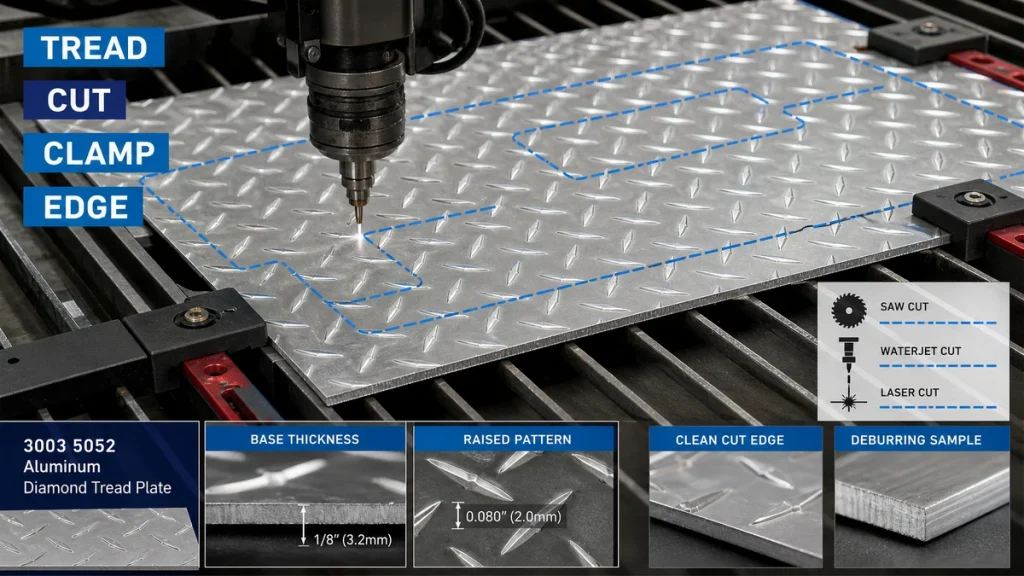
The raised diamonds are not a substitute for base-metal thickness. When comparing sheets, check whether a stated thickness refers to the flat metal beneath the pattern or the overall height including the raised tread. That distinction affects weight, fit and how the sheet sits against adjoining parts.
The pattern can improve grip in some conditions, but it does not establish slip performance for a particular floor. Water, oil, footwear and cleaning conditions matter, so confirm any required traction standard separately.
Start with the setting. For outdoor or frequently wet use, ask about the alloy and temper as well as the surface finish. A sheet chosen mainly for appearance may not be the right choice where corrosion exposure or forming requirements drive the decision.
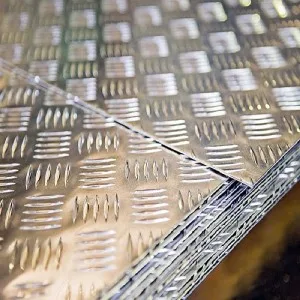
Match the tread layout to the installation. Check which face must be patterned, whether the pattern direction matters across joined sheets, and how exposed edges will meet surrounding surfaces. A visible joint can look uneven if adjacent pieces are cut without regard to pattern alignment.
For a step or floor panel, specify the support beneath the sheet rather than relying on tread appearance to judge strength. Span, fastening points and expected loads affect the suitable base thickness. A cover fixed over a solid backing is a different application from an unsupported panel.
If the sheet will be cut, bent or fitted into a frame, provide a drawing or finished dimensions and identify any critical edges. Ask SUZHOU TOP METAL MATERIALS CO.,LIMITED to confirm available alloy, temper, base-thickness convention and cutting options before settling on a sheet.