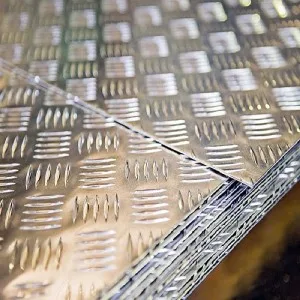
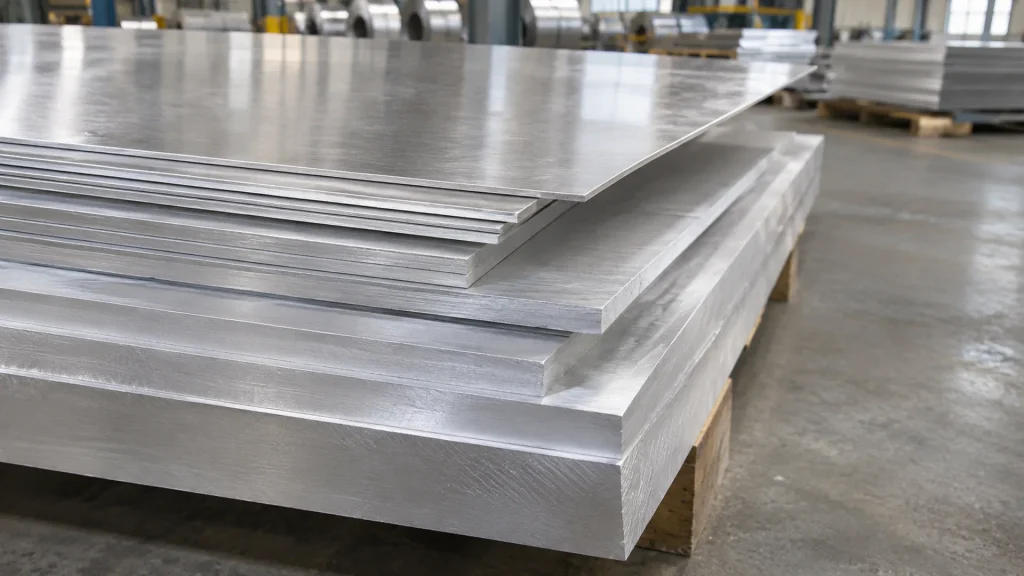
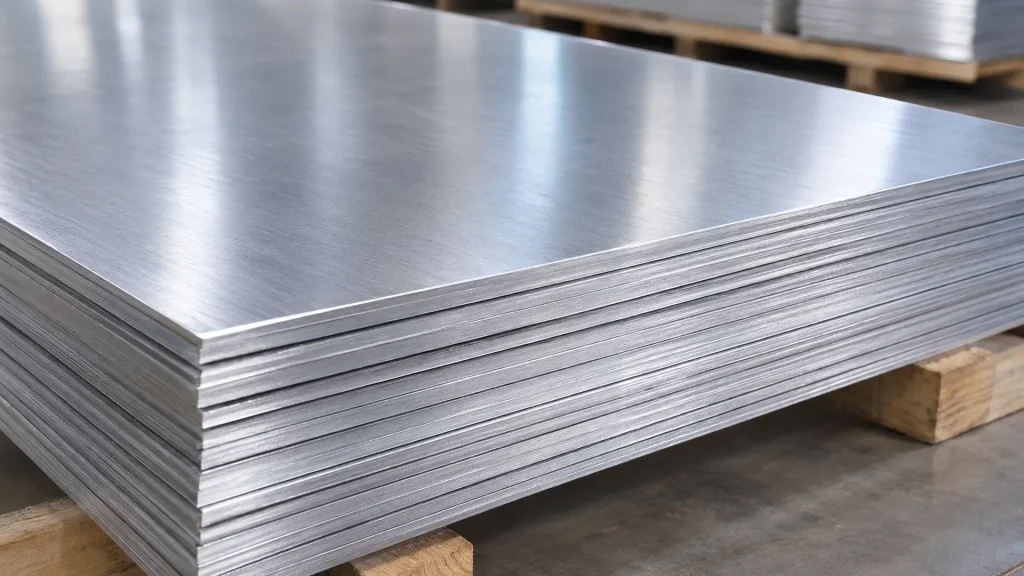
| Stock form versus finished part |
Confirm whether the available material is full sheet, a cut blank, or an already fabricated part. |
Sheet in stock can still need cutting and forming before it is ready to use. |
Ask which fabrication steps remain after the material is allocated. |
| Alloy, temper, and thickness |
Match the stated alloy, temper, and base-metal thickness to the drawing; do not rely on gauge alone. |
These details affect bending, strength, and fit. A coating may add thickness without changing the base metal. |
Ask the manufacturer to confirm the exact stock specification before approving a substitution. |
| Blank size and cutting yield |
Compare available sheet dimensions with the part outline, grain direction, and required edge allowances. |
Stock may be large enough overall but unsuitable for the cut layout or visible finish. |
Send a drawing and ask whether the proposed stock size accommodates the part. |
| Bends, holes, and finish sequence |
Review bend locations, hole positions, and whether the finish is applied before or after fabrication. |
Forming and cutting can affect edges, hole alignment, and the appearance of a finished surface. |
Ask the factory which operations it can perform on the proposed stock and in what sequence. |
| Available quantity and dispatch scope |
Confirm the quantity reserved in the specified material and whether the quoted timing covers raw sheet or completed parts. |
An in-stock claim from suppliers does not establish when fabricated parts will be ready. |
For a China order, request separate confirmation of material availability, fabrication timing, and dispatch terms. |