

Stucco Embossed Aluminum Sheet
A stucco embossed finish is designed to have superior durability, reduce glare and reflectivity, and also to give aluminum a decorative finish. The stucco aluminum sheet is also a finish that can stan…
Read More1/8-Inch 4x8 Aluminum Sheet Weight Guide: China Manufacturers, Factories and Suppliers | SUZHOU TOP METAL MATERIALS CO.,LIMITED
Use this page to review China 1/8-Inch 4x8 Aluminum Sheet Weight Manufacturer, Factory & Suppliers for early-stage product development decisions. It is designed for teams checking whether sheet size, alloy options, surface requirements, and weight expectations can support a new product line.
The focus is quality review before RFQ release. Compare related products, prepare technical questions, and confirm what documentation, samples, and inspection points should be discussed with SUZHOU TOP METAL MATERIALS CO.,LIMITED.
A stucco embossed finish is designed to have superior durability, reduce glare and reflectivity, and also to give aluminum a decorative finish. The stucco aluminum sheet is also a finish that can stan…
Read More
Deep Drawing Aluminum Sheet Circle 1050 1060 Aluminum Plate ASTM B209 Approved Deep drawing 1050 1060 ASTM B209 cookware use aluminium sheet circle Aluminum circle, as aluminum disc, is normally with …
Read More
China brushed anodized aluminum sheet copper color anodising black aluminium plate Anodized aluminum sheet is a sheet metal product consisting of aluminum sheeting exposed to an electrolytic passivati…
Read More
Low Strength 1100 H14 Aluminum Sheet 0.2mm-30mm Mill Finish Aluminum Sheet
Read More
1050 aluminum sheet is the most useful sort of series 1000 aluminum alloy. As a kind of pure aluminium sheet, 1050 aluminium sheet is excellent on corrosion resistance, thermal conductivity and electr…
Read More
5052 is an aluminium alloy, primarily alloyed with magnesium and chromium 5052 aluminum is the highest strength alloy of the more non-heat-treatable grades. Its resistance to fatigue is better than mo…
Read MoreProduct development review guide
The related product list helps you compare China 1/8-Inch 4x8 Aluminum Sheet Weight Manufacturer, Factory & Suppliers by actual product direction rather than keyword wording alone. Check whether each product supports new product line development, then use the table below to prepare a clearer RFQ.
| Criterion | What To Check | Why It Matters | Buyer Tip |
|---|---|---|---|
| Weight basis | Confirm alloy, thickness, size | Weight varies by grade/tolerance | Ask for kg/sheet in RFQ |
| Thickness tolerance | Measure 1/8-inch range | Affects weight and fit | Request tolerance standard |
| Surface quality | Inspect scratches, stains, flatness | Impacts prototype review | Use photos before shipment |
| Documentation | COA, MTC, packing list | Supports quality approval | Match docs to batch |
| Sample approval | Test cut, bend, finish | Reduces line launch risk | Approve sample before bulk |
A 1/8-inch 4x8 aluminum sheet is often reviewed by thickness, width and length tolerance, alloy grade, surface condition, and estimated piece weight. Buyers should confirm the exact material standard and whether the sheet will be cut, finished, packed, or supplied as standard stock size.
For China 1/8-Inch 4x8 Aluminum Sheet Weight Manufacturer, Factory & Suppliers, the best inquiry includes application details, target quantity, required documents, sample needs, and inspection expectations. This helps the supplier respond with a clearer quotation and more relevant product comparison.
Begin by defining the product development use case. Share whether the aluminum sheet will be used for panels, covers, parts, fixtures, prototypes, or another application. The supplier can give more useful feedback when the application, forming method, surface needs, and any weight limits are explained early.
Prepare technical details before requesting a quotation. Include thickness, 4x8 size requirement, alloy preference if known, temper, finish, tolerance expectations, and packaging needs. If your team is comparing related products, ask how alternative thicknesses, grades, or finishes may affect weight, processing, and cost.
For sample confirmation, ask what sample format is available and what can be checked before mass ordering. Practical inspection points may include dimensions, surface condition, flatness, protective film, labeling, and packaging. If documentation is important, request available material information, packing details, and inspection records that match your internal approval process.
When evaluating supplier responses, look beyond the unit price. A strong reply should clarify assumptions, ask relevant follow-up questions, and explain lead time, MOQ, customization options, and after-sales support. This is especially useful when shortlisting suppliers for a new product line rather than placing a one-time spot order.
| Criteria | Importance | Description | Example Options |
|---|---|---|---|
| Weight calculation basis | High | Prevents design errors | Nominal vs measured thickness |
| Alloy and temper | High | Affects strength and forming | 5052-H32 or 6061-T6 |
| Surface condition | Medium | Impacts appearance and finishing | Mill finish or coated |
| Inspection documents | High | Supports quality review | MTR and dimension report |
| Processing options | Medium | Helps RFQ accuracy | Cutting or film protection |
Recommended Products
Review the related products below to compare aluminum sheet choices that may fit different design, processing, and sourcing needs. Shortlisting several options can help your team confirm whether the standard 1/8-inch 4x8 sheet is the best match or whether another alloy, finish, or thickness should be considered.






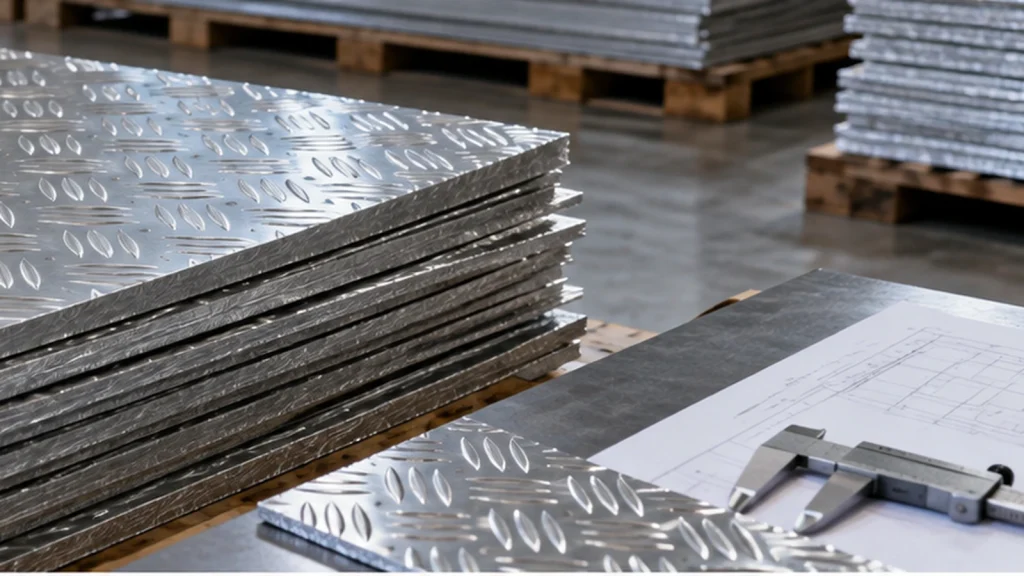
A 4×8 sheet of 1/4 inch aluminum price quotation becomes useful only after the buyer confirms that every supplier is pricing the same product and delivery scope. For this procurement path, the ta…

Direct Answer: Buyers should ask an anodised aluminum sheet supplier China sourcing teams are reviewing to define the base alloy, temper, thickness, sheet size, anodizing sequence, finish, color-contr…
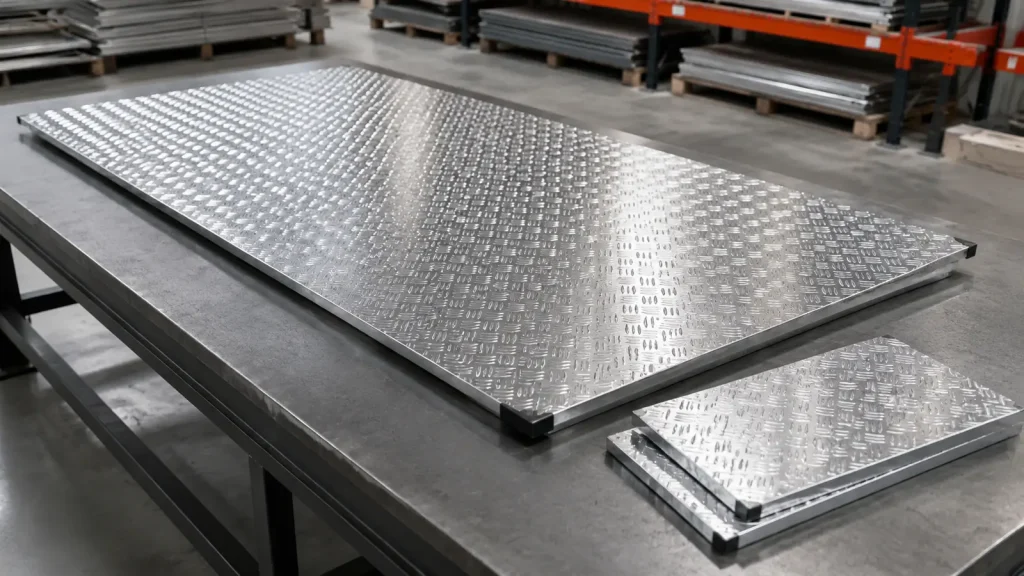
A 4×8 aluminum checkered plate order should define much more than nominal sheet length and width. Buyers need to state the alloy and temper, base-metal thickness, raised pattern, finished dimensi…
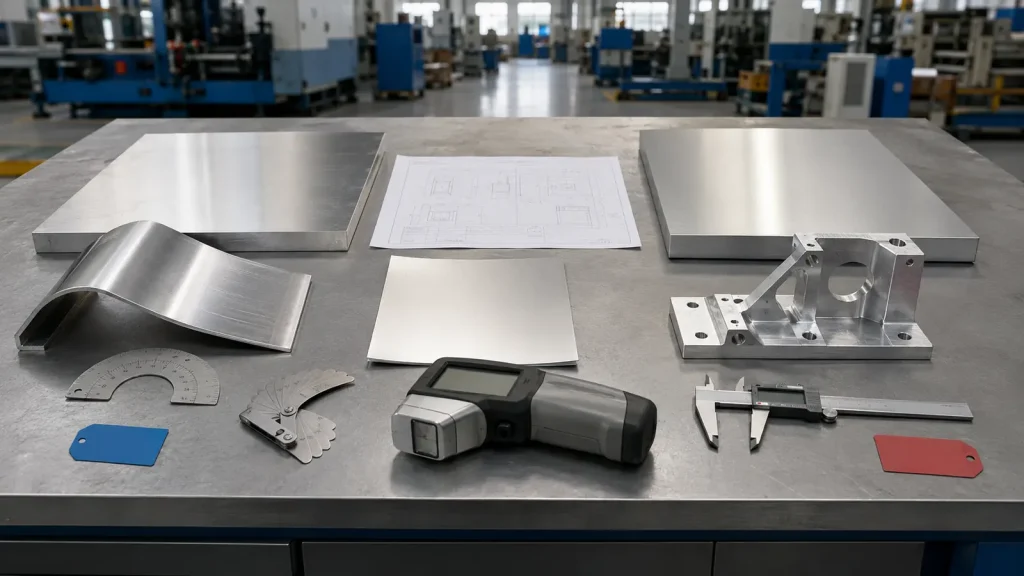
6061-T4 and 6061-T6 are not different aluminum alloys; they are different temper conditions of alloy 6061. Buyers should not treat T6 as a universally “better” version of T4. The correct t…
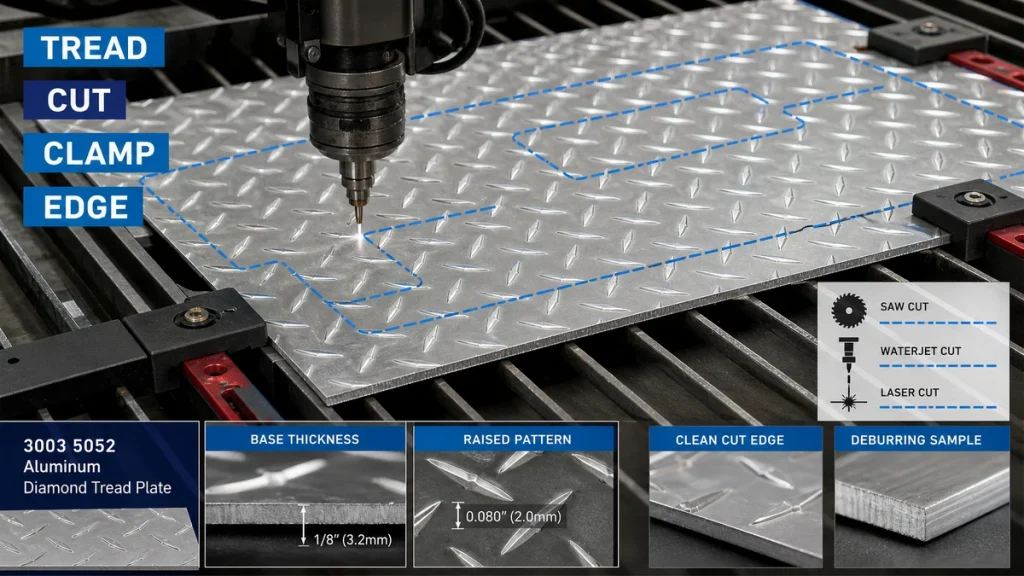
How Should Fabricators Cut Diamond Tread Aluminum Sheet Without Distorting the Pattern or Edges? For fabricators of flooring, steps, toolboxes, and industrial panels, when assessing how to cut diamond…

Buyers should send the required alloy, temper, thickness, sheet size, hole shape, hole size, pitch, pattern orientation, open area, blank margins, tolerances, finish, flatness, burr direction, drawing…
Recent buyer-style feedback on this page is organized around shortlisting related products, planning custom projects, checking product specifications, and comparing supplier options.
I used the 1/8 4x8 aluminum sheet weight information to frame my material inquiry more clearly before discussing gauge, alloy, and handling requirements.
I needed a quick way to compare 1/8-inch 4x8 aluminum sheet weight against our internal project notes, and this tag page kept the topic focused.
I was clarifying whether 1/8 4x8 aluminum sheet weight matched our fabrication assumptions, and the page helped me ask suppliers more precise questions.
I referenced the 1/8-inch 4x8 aluminum sheet weight topic while comparing sourcing notes, especially where transport planning and material selection overlapped.
Include alloy grade, temper, sheet thickness tolerance, surface finish, quantity, cutting needs, packaging preference, and intended application. For weight review, confirm whether calculations use nominal 1/8-inch thickness or measured metric thickness.
Weight is typically estimated from length, width, thickness, and aluminum density, then compared with actual sheet measurements. The team should confirm thickness units, alloy density assumptions, and whether protective film or packaging is excluded.
Compare 1/8-inch 4x8 sheets with thinner gauges, thicker plates, tread sheets, anodized sheets, and coated sheets. Review formability, strength, surface requirements, machining needs, and final product weight impact before selecting a specification.
Check measured thickness, flatness, surface appearance, edge condition, alloy and temper documentation, and sample weight. If the product line needs forming or machining, test a small batch under the planned production process.
Useful documents may include material test reports, dimensional inspection records, surface inspection notes, packing details, and order specification references. Buyers should align document requests with internal engineering, purchasing, and quality review procedures.
Ask how specification discrepancies, documentation questions, surface concerns, or dimensional issues are reviewed after receipt. Clarify communication steps, required evidence, and whether technical feedback can support future RFQ adjustments or repeat development orders.
Send your thickness, size, alloy, finish, quantity, destination, sample request, and documentation needs so the team can review your RFQ more efficiently.