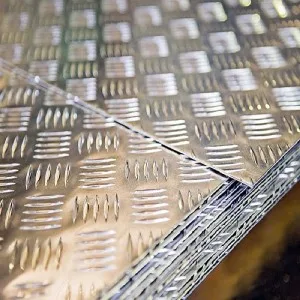
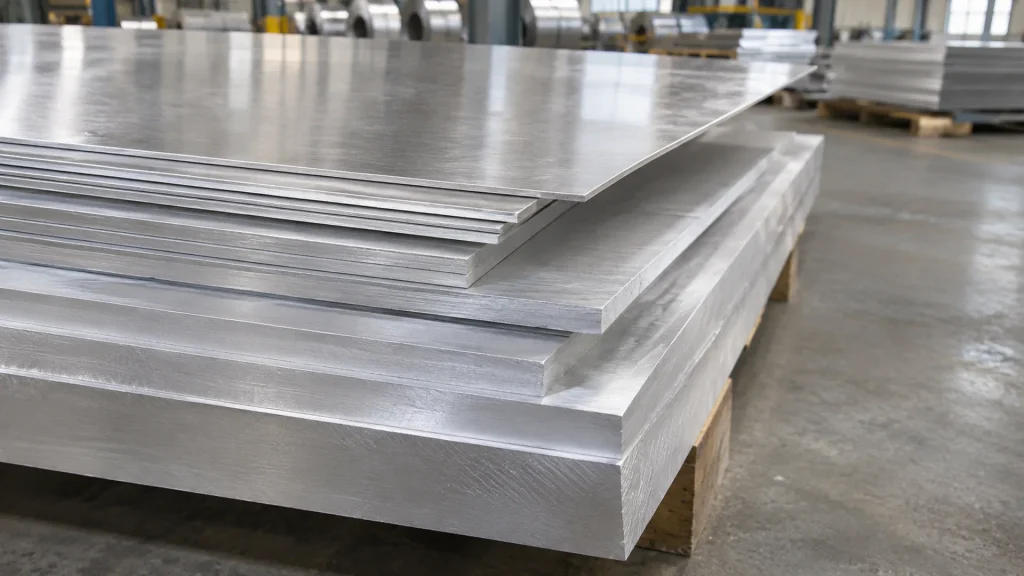
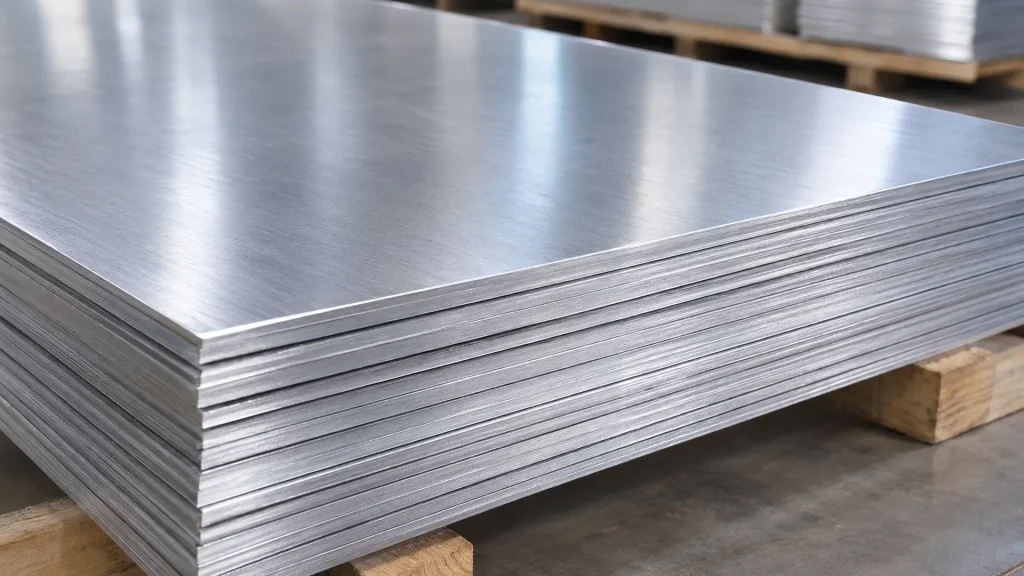
Buying sheet and buying a fabricated part are different decisions. A sheet order specifies material, thickness and finish; a fabricated-part order also needs a drawing that defines cut edges, bends, holes, tolerances and the surfaces that must remain free of visible marks. A supplier that can provide the sheet may not perform every forming or finishing operation.
For bent parts, confirm the alloy and temper before settling the bend details. A material choice that suits a flat cover may be less suitable for a tight formed corner. If the part will be anodized, distinguish base-metal thickness from coating thickness rather than treating the finish as added sheet gauge.
Specify sheet thickness as a measured dimension, preferably with units, rather than relying on gauge alone. State where thickness matters to assembly; a nominal material callout does not replace a fit requirement for a slot, fastener or mating panel.
Review bends alongside the drawing’s grain direction, edge distances and visible faces. A tight bend or a hole close to a bend may require a design change or a different material choice. Ask the manufacturer to flag features it cannot make as drawn before approving production.
Match the finish to the job. Anodizing can serve a visible cover, while a concealed bracket may call for a different finish decision. For perforated panels, define the open area and its purpose: an airflow opening and a protective guard may need different hole patterns. Do not assume a pattern that looks open will meet an airflow requirement.
For suppliers serving a Wisconsin project from China, clarify whether fabrication, finishing and inspection happen at one factory or through separate operations. Send a drawing, expected quantity and delivery destination, then ask what material and process details need confirmation before a quotation.