

Metal Grating bar aluminum Grating for walkway
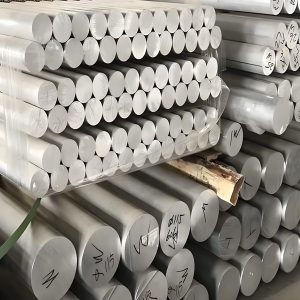
Manufactured from lightweight, corrosion resistant ASTM B221, 6063 or 6061, Aluminum grating bar is ideal for both industrial and architectural applications.
Read MoreChina Swage-Locked Aluminum I-Bar Grating: Manufacturer Questions | SUZHOU TOP METAL MATERIALS CO.,LIMITED
Swage-locked aluminum I-bar grating is a candidate for walkways and platforms where weight matters. Its I-shaped bearing bars can reduce panel weight, while crossbars mechanically locked into the bearing bars hold the grid together. The first decision is whether the proposed panel can carry the required load across the actual support span—not simply whether it has the right overall dimensions.
Manufactured from lightweight, corrosion resistant ASTM B221, 6063 or 6061, Aluminum grating bar is ideal for both industrial and architectural applications.
Read More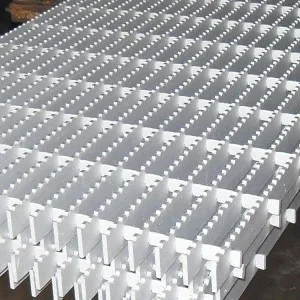
Aluminum grating bar is lightweight, corrosion resistant, and fully recyclable. With an unmatched strength-to-weight ratio, these products are ideal for both industrial and…
Read More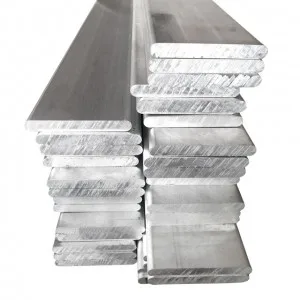
China Flat bus bar 1050 1350 1060 1070 1370 Aluminum Busbar for Transformers In Electric power distribution, a busbar also called bus bar, buss bar or busbar, which is a metallic strip or bar, typical…
Read More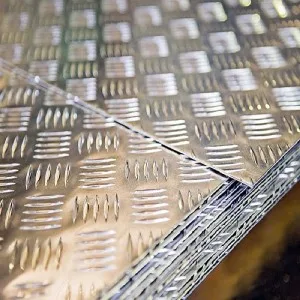
tool box fabrication aluminum brite plates 5 bars aluminum checker plate factory Aluminum checker sheet was commonly known as an aluminum checker plate and sometimes spelt aluminum chequer plate, an a…
Read More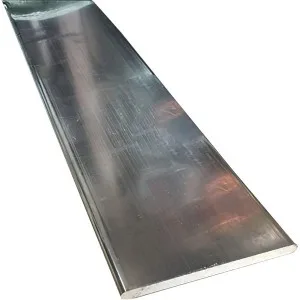
custom Rectangular busbar square angle EN AW 1350 aluminum Flat bus bar Pure aluminum has a conductivity of about 65 percent of the International Annealed Copper Standard (lACS). Aluminum can be produ…
Read More
Mill Finished Aluminum Alloy Plate 1050 H14 Aluminium Sheet Alloy available: 1050 1060 1100 3003, 3105, 5052, 5005, 5754 5083 5182, 6061 6063 6082, 7075, 8011… Temper: HO, H111,H12, H14, H24,H 32, H11…
Read MorePanel selection
Compare candidate panels by bearing-bar profile and direction, spacing, support span, load-table basis, surface and finished edge details. Each choice affects how the grating fits and performs in the intended opening.
| Criterion | What To Check | Why It Matters | Buyer Tip |
|---|---|---|---|
| Bearing-bar direction and clear span | Mark the supports and bearing-bar direction on a panel sketch; compare the clear span with the applicable load table. | A panel that spans farther than expected may deflect too much, even if its overall dimensions look right. | Ask suppliers which way the I-bars must run across your supports. |
| I-bar size and spacing | Request the bearing-bar profile, depth and spacing shown on a section drawing. | These details affect load capacity, open area and how the surface feels underfoot. | Give the manufacturer your intended use before choosing spacing from a drawing alone. |
| Swage-locked crossbar construction | Confirm how the crossbars lock into the I-bars and request a drawing of the proposed construction. | The connection method is part of the panel design; a similar-looking grating may use a different assembly. | Ask the factory to identify the crossbar connection on its drawing. |
| Walking surface and openings | Compare the proposed top surface and openings with the footwear, wheeled traffic and dropped-object risks at the site. | A surface suited to drainage may be a poor fit for small wheels or areas where objects must not fall through. | For a walkway or tread, ask a China-based manufacturer what surface and opening options it can supply. |
| Panel edges and support layout | Show cutouts, edge supports and fixing locations on a dimensioned layout. | An unsupported cutout or misplaced edge can change how the panel bears on its frame. | Send the layout to prospective suppliers and ask them to confirm the proposed panel boundaries. |
An I-bar panel is not interchangeable with a rectangular-bar panel of the same depth. Bearing-bar shape and spacing affect weight, open area and load behavior. Ask for a load table for the proposed configuration, then check its stated support span, load type and deflection against the application. A panel that suits pedestrian traffic may not suit concentrated loads from equipment.
Start with the installation: give the clear span between supports, the direction the bearing bars must run, and the loads the grating will see. A common mistake is to specify panel length without identifying the bearing-bar direction; the bars must span between supports for the load-table comparison to be meaningful.
Choose the opening and surface for the people and objects using it. A more open grid may suit drainage and airflow, but smaller items can pass through it. If slip resistance matters, ask what surface options are available for the proposed I-bar design rather than assuming every panel has the same finish.
For stair treads or cut-to-size walkway panels, provide finished dimensions and identify any edges that need framing or other treatment. Confirm how the panels will be supported and secured; a suitable load rating does not resolve an unsupported edge or an incompatible fixing detail.
If sourcing from China, compare suppliers on the same drawing and load requirements rather than on panel weight alone. Ask the manufacturer to confirm the proposed configuration and load-table basis, and ask the factory what edge treatment and surface options it can supply. Those answers will make alternatives easier to compare.
| Criteria | Importance | Description | Example Options |
|---|---|---|---|
| Loading conditions | Decisive for structural suitability | Compare load information for the proposed panel at the actual support span, distinguishing distributed pedestrian loads from concentrated or wheel loads. | A maintenance walkway and a cart route may need different loading checks. |
| Bearing-bar profile | Important when balancing panel weight and load behavior | Compare an I-bar proposal with a rectangular-bar alternative using their stated load data, rather than matching bar depth alone. | A lighter I-bar option may be attractive for handling, provided it meets the required span and deflection. |
| Grid opening and surface | Important for the people and equipment using the grating | Check whether the openings suit footwear, small objects and wheels, and specify any surface-grip requirement separately from the swage-locked construction. | An open grid that drains well may be unsuitable where narrow wheels must cross it. |
| Finished edges and attachment | Essential for a panel that fits and can be secured | Confirm cut dimensions, edge treatment, support locations and compatible fixing details on the proposed drawing. | A cut panel beside an opening may need a specified finished edge. |
| Exposure and material details | Relevant for outdoor or chemically exposed locations | Ask the factory to identify the proposed alloy and finish, then assess them alongside adjacent metals and the intended environment. | An outdoor platform calls for a different exposure discussion than an indoor dry walkway. |
Related Options
For an elevated maintenance walkway, prioritize a panel configuration checked against the walkway’s support span and expected loads. Lower weight is useful for handling, but it should not replace the span and deflection check.





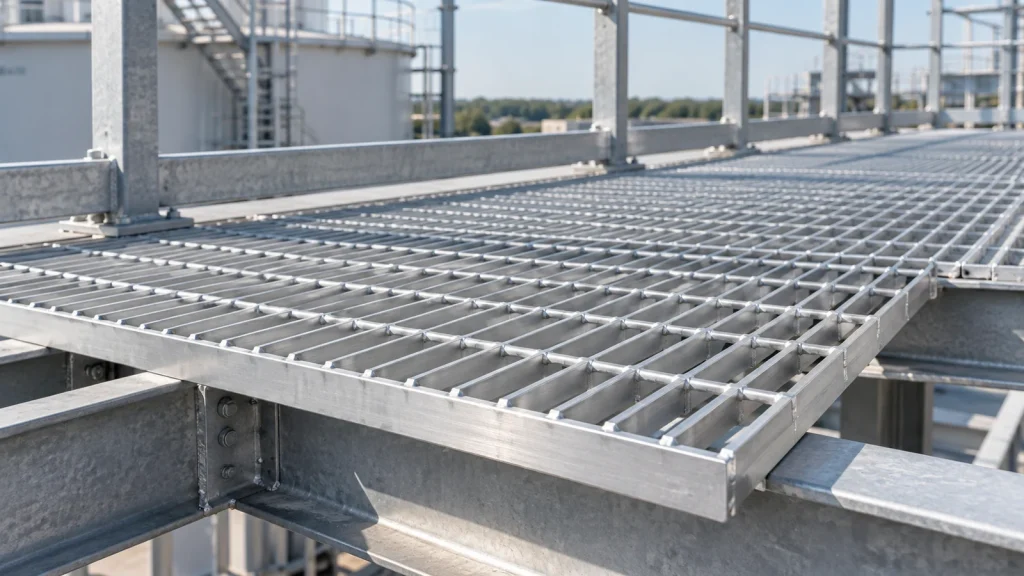
An aluminum bar grating load table is useful only when its product configuration, span, loading pattern and design assumptions match the panel being considered. Check the required load and the corresp…
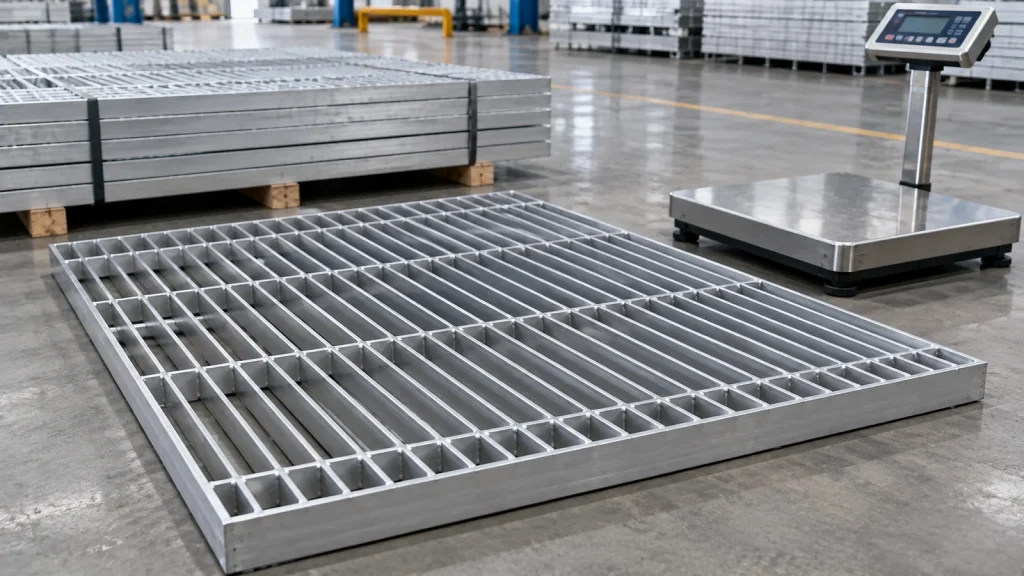
Aluminum bar grating weight is calculated from the actual volume of metal in the panel, multiplied by the density of the specified alloy. A grating panel is not a solid sheet: most of its plan area is…
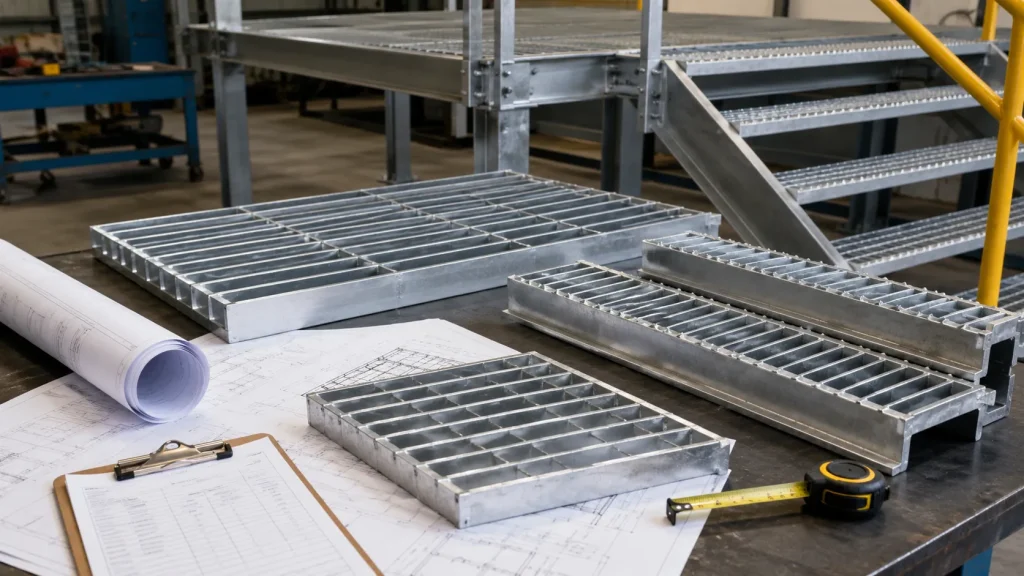
Direct Answer: Buyers should specify aluminum bar grating from the load path outward: first define the walkway or stair application, clear span, support layout, load and deflection basis; then confirm…

Is Your Aluminum Bar Causing CNC Turning Runout? Aluminum bar may contribute to CNC turning runout when it is bent, out of round, inconsistent in diameter, damaged near the clamping area, or deformed …
6061-T6 aluminum bar for CNC and structural parts

Aluminum sheet gauge numbers describe nominal thickness only when the gauge system and metal are identified. On a commonly used Brown & Sharpe (B&S) nonferrous gauge chart, 16-gauge aluminum i…
Possibly, but a pedestrian load rating alone is not enough. Check the proposed panel against wheel loads and the direction of travel, and consider whether the openings will catch narrow wheels.
Consider rectangular bearing bars if a suitable I-bar configuration cannot meet the required loading or finished-edge details. Compare proposed panels at the same support span and load conditions; bar depth alone does not establish equivalence.
No. Swage-locking describes how the crossbars are held in the bearing bars, not the grip of the walking surface. Ask which surface options are available if the installation may be wet or slippery.
Describe the exposure, including contact with other metals or chemicals, and ask which aluminum alloy and finish are proposed. The installation details matter too: ask how the panels will be fixed and whether the proposed fixings suit that exposure.
Ask it to identify the bearing-bar direction, openings, finished dimensions, edge treatment and fixing method on the drawing. If you are comparing suppliers, request those details in the same format so differences in the proposed panels are visible.
Send your clear support span, expected loads and panel dimensions to ask SUZHOU TOP METAL MATERIALS CO.,LIMITED which swage-locked aluminum I-bar configuration it can offer.