

Thick Aluminum Sheet
The next finer classification is the aluminium sheet standard sizes. Standard aluminium sheet sizes include aluminium sheet metal thickness, width and length. When ordering aluminum alloy sheet, custo…
Read More16-Gauge Aluminum Sheet Thickness & China Manufacturer Quotes | SUZHOU TOP METAL MATERIALS CO.,LIMITED
16-gauge aluminum sheet is nominally 0.0508 inches (about 1.29 mm) thick under the aluminum sheet gauge convention. If you are buying it for a formed cover, panel or enclosure, put the required thickness in inches or millimeters on the drawing rather than relying on “16 gauge” alone.
The next finer classification is the aluminium sheet standard sizes. Standard aluminium sheet sizes include aluminium sheet metal thickness, width and length. When ordering aluminum alloy sheet, custo…
Read More
3003 Aluminum Sheet Features ♦ Alloy: 3003 ♦ Temper: H14, H16, H18, H22, H24, H26, O ♦ Thickness(mm):0.25-10 ♦ Width(mm):800-2200 ♦ This series aluminum sheet is anticorrosive and its production techn…
Read More
China brushed anodized aluminum sheet copper color anodising black aluminium plate Anodized aluminum sheet is a sheet metal product consisting of aluminum sheeting exposed to an electrolytic passivati…
Read More
Deep Drawing Aluminum Sheet Circle 1050 1060 Aluminum Plate ASTM B209 Approved Deep drawing 1050 1060 ASTM B209 cookware use aluminium sheet circle Aluminum circle, as aluminum disc, is normally with …
Read More
Mill Finished Aluminum Alloy Plate 1050 H14 Aluminium Sheet Alloy available: 1050 1060 1100 3003, 3105, 5052, 5005, 5754 5083 5182, 6061 6063 6082, 7075, 8011… Temper: HO, H111,H12, H14, H24,H 32, H11…
Read More
Mill Finish Aluminum Sheet Circle 1060 1070 1100 3003 Aluminum Plate For Cookware Aluminum circle 1050 1060 1070 3003 etc is mainly used in making cookware, like non-stick pan, pressure cooker, hardwa…
Read MoreSheet selection
Compare aluminum sheet by nominal thickness, alloy, temper, finish and required size. For a bent part, check formability before treating sheets of the same gauge as interchangeable.
| Criterion | What To Check | Why It Matters | Buyer Tip |
|---|---|---|---|
| Gauge-to-thickness conversion | Confirm that 16 gauge means approximately 0.0508 in (1.29 mm) of aluminum, rather than a steel-gauge thickness. | Gauge numbers do not have the same thickness across metals. | Ask the supplier to state the nominal thickness in millimeters or inches on the quote. |
| Thickness tolerance | Request the permitted thickness range, not just the nominal gauge. | Variation can affect fit in slots, folds and assembled parts. | If clearance is tight, give the manufacturer your acceptable minimum and maximum thickness. |
| Base metal versus finished thickness | Clarify whether the stated thickness refers to bare sheet or includes an anodized or other finish. | A finished surface may change the dimension relevant to a close fit. | Ask the factory to identify which thickness it will verify. |
| Alloy and temper for forming | Specify the alloy and temper alongside the 16-gauge thickness, especially for bent parts. | Sheets of the same thickness can behave differently during forming. | Send suppliers the bend details and ask which available alloy and temper suit the part. |
Gauge numbers do not mean the same thickness for every metal. A 16-gauge steel sheet, for example, is not the same nominal thickness as 16-gauge aluminum. Confirm the material and dimensional tolerance before approving a substitution.
Thickness also does not tell you how the sheet will behave in a bend. Alloy and temper affect formability and strength, so a drawing that specifies only “16-gauge aluminum” may leave an important production choice open.
Start with the finished part. A flat panel may call for stiffness and a particular surface finish; a bent enclosure also needs an alloy and temper suited to its bend design. Do not assume two sheets of the same thickness will form alike.
Specify whether 0.0508 inches (about 1.29 mm) is the required nominal base-metal thickness and state the acceptable tolerance. If the sheet will be anodized or coated, clarify whether a finished-thickness limit applies as well.
For buyers sourcing from China, compare suppliers against the same drawing, alloy, temper, finish and cut size. Ask the manufacturer to confirm the thickness convention and tolerance it will quote; comparing gauge labels alone can conceal a difference.
If you need cut blanks or a formed part, ask whether the factory can provide the required processing and how dimensions will be checked. Send the drawing or intended use with your inquiry so the thickness and material choice can be reviewed together.
| Criteria | Importance | Description | Example Options |
|---|---|---|---|
| Gauge label versus stated thickness | Essential for comparing quotations | A gauge label depends on the material convention; a stated dimension makes the requirement clearer. | Write 0.0508 inches nominal aluminum sheet rather than only “16 gauge.” |
| Thickness tolerance | Important for close-fitting parts | Nominal thickness does not describe the acceptable variation in delivered sheet. | A cover that slides into a narrow channel needs a defined thickness tolerance. |
| Alloy and temper | Critical for parts with bends | Sheets of equal thickness can differ in formability and strength. | Compare a formable sheet option with a stronger temper against the same bend design. |
| Base-metal versus finished thickness | Relevant when the sheet is coated or anodized | A base-metal dimension and a finished-part limit answer different questions. | State a nominal base-metal thickness and, if needed, a separate maximum finished thickness. |
| Sheet versus cut blank | Depends on how the part enters production | Buying blanks adds cut dimensions and edge requirements to the material decision. | A flat sheet can be cut later; a ready-to-form blank needs dimensions on the purchase drawing. |
Related Options
For an enclosure with bends, the key choice is not just a 1.29 mm nominal thickness: the alloy and temper must also fit the forming design. For a flat cover, finish and dimensional tolerance may matter more.






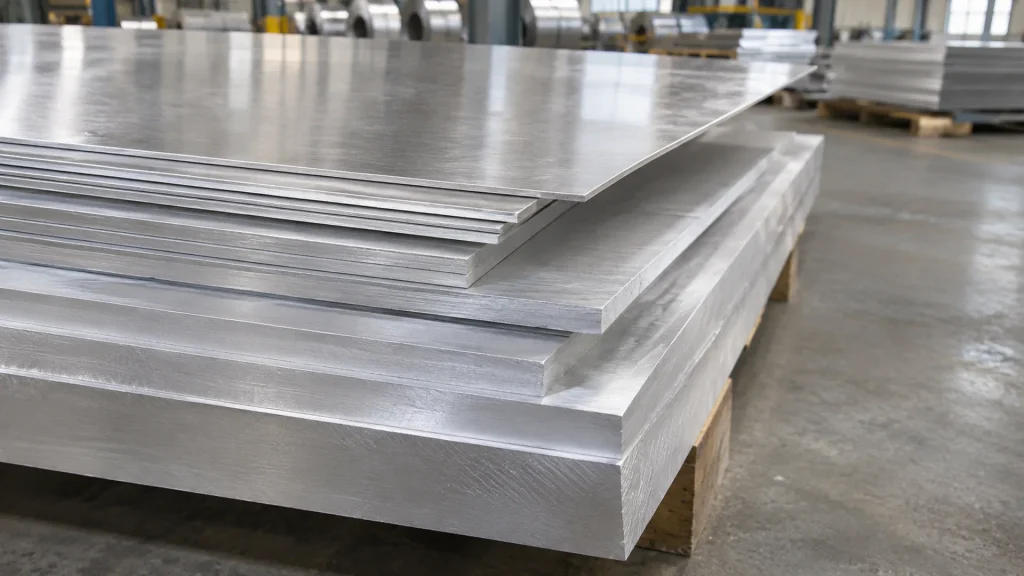
Aluminum sheet gauge numbers describe nominal thickness only when the gauge system and metal are identified. On a commonly used Brown & Sharpe (B&S) nonferrous gauge chart, 16-gauge aluminum i…
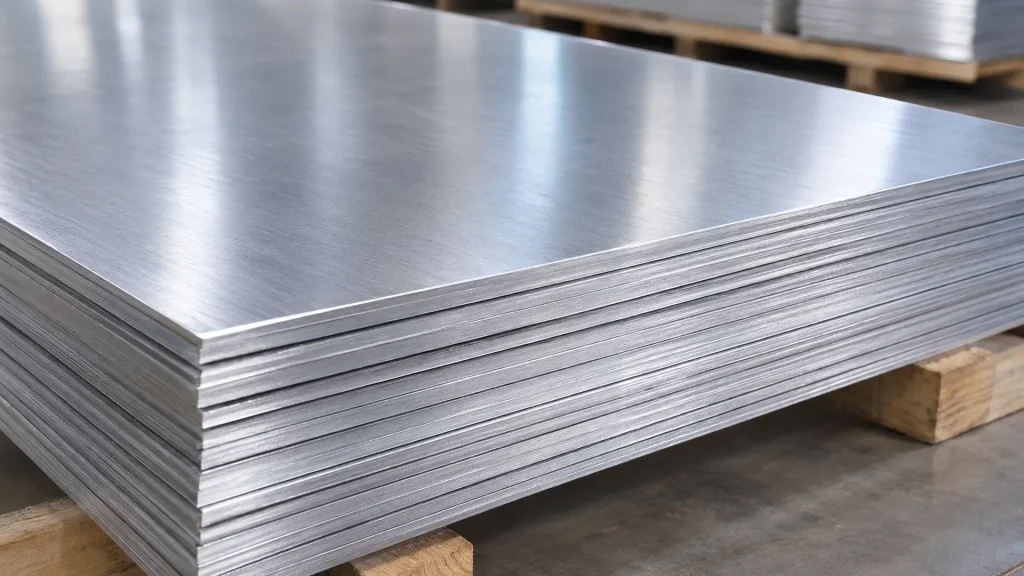
Yes, 1/8-inch (0.125-inch, 3.175-mm) aluminum sheet can be bent without cracking, but thickness alone cannot determine a safe bend radius. The alloy, temper, formed inside radius, bend-line orientatio…

Perforated aluminum sheet can provide a ventilation path, but open-area percentage is not an airflow or pressure-drop rating. Begin with the hole pattern, calculate the openings available after solid …

5052 aluminum sheet and plate are flat-rolled aluminum-magnesium products considered for parts that need formability, corrosion resistance and moderate strength. Choosing the material means specifying…

Anodized aluminum sheet thickness can mean two different things: the thickness of the aluminum substrate and the thickness of the anodic oxide layer. They are not interchangeable. Substrate thickness …
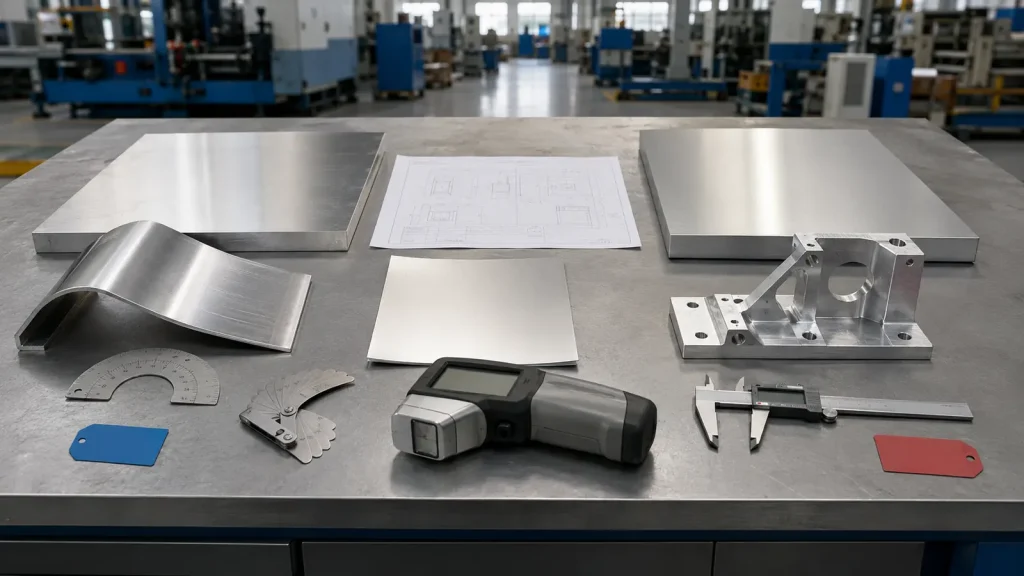
6061-T4 and 6061-T6 are not different aluminum alloys; they are different temper conditions of alloy 6061. Buyers should not treat T6 as a universally “better” version of T4. The correct t…
No. Under the aluminum sheet gauge convention, 16 gauge is nominally 0.0508 inches thick; 1/16 inch is 0.0625 inches. Specify the required dimension rather than treating those labels as interchangeable.
It may be, but thickness alone cannot establish whether the part will form without cracking or meet its stiffness requirement. Check the bend geometry, alloy and temper against the drawing before selecting the sheet.
Possibly. An alloy and temper chosen for easier forming may be preferable to a stronger but less formable option; changing the alloy without checking the part’s strength and finish requirements can create a different problem.
Keep the base-metal thickness separate from any finished-thickness requirement. If the coated part must fit a tight assembly, state both requirements so the supplier can assess them.
Confirm the alloy, temper, thickness tolerance, finish and blank dimensions, including any critical edge or hole locations. Ask how the supplied blanks will be checked against your drawing.
Share your drawing or intended use, the required thickness and tolerance, and any alloy, temper or finish requirement. Ask SUZHOU TOP METAL MATERIALS CO.,LIMITED to confirm what it can supply.