

Marine Grade aluminum Plate sheet Coil
Marine Grade aluminum plate sheet coil has excellent resistance against seawater and industrial chemicals, It is applicable for the manufacturing of different kinds of ships…
Read MoreMarine Aluminum Sheets For Sale Selection Guide | SUZHOU TOP METAL MATERIALS CO.,LIMITED
Marine aluminum sheets for sale may be intended for a hull panel, deck component or interior fitting, but those jobs do not call for the same material. The first decision is the alloy and temper that suit the part’s exposure, forming and welding requirements—not just a sheet size that fits the drawing.
Marine Grade aluminum plate sheet coil has excellent resistance against seawater and industrial chemicals, It is applicable for the manufacturing of different kinds of ships…
Read More
1050 aluminum strip coil are often used in daily necessities, lighting fixtures, reflectors, decorations, chemical industry containers, heat sinks, signs, electronics, lamps, nameplates, electrical ap…
Read More
Manufactured from lightweight, corrosion resistant ASTM B221, 6063 or 6061, Aluminum grating bar is ideal for both industrial and architectural applications.
Read More
Plain 3003 Aluminium Alloy Plate Aluminum Roofing Coil For Trailer 3000 series aluminum Plate are widely used in construction,decoration,pipe, packing,automobile,air conditioner ,pot,containers,refrig…
Read More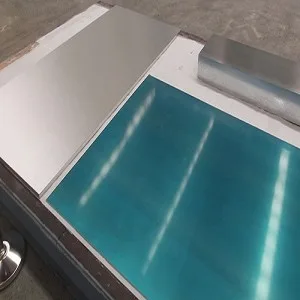
High strength 5005 Aluminium Plate Alloy 2mm 3mm 4mm for Architectural applications 5005 aluminium alloy plate is an aluminium alloy with good resistance to atmospheric corrosion. It is used in decora…
Read More
3003 Aluminum Sheet Features ♦ Alloy: 3003 ♦ Temper: H14, H16, H18, H22, H24, H26, O ♦ Thickness(mm):0.25-10 ♦ Width(mm):800-2200 ♦ This series aluminum sheet is anticorrosive and its production techn…
Read MoreMaterial selection
Compare marine sheet options by alloy, temper, thickness, size and surface condition, then check each against the part’s exposure and fabrication steps.
| Criterion | What To Check | Why It Matters | Buyer Tip |
|---|---|---|---|
| Alloy for the marine part | Match the proposed alloy to the part’s seawater exposure, strength needs and fabrication method. | A sheet suitable for interior panels may not be the right choice for a welded hull component. | What alloy is proposed for this part, and why? |
| Temper and forming | Confirm the temper against the bends and forming steps on your drawing. | A harder temper may resist forming or crack at a tight bend. | Can the proposed temper accommodate the required bends? |
| Welded construction | Tell the seller where the sheet will be welded and ask for the applicable material documentation. | Welding can change the properties around a joint, affecting the design choice. | Is this alloy and temper suitable for the planned welds? |
| Sheet size and tolerance | Specify thickness, width, length, flatness needs and any cut-to-size requirement. | Nominally similar sheets can create different cutting waste or fit problems. | Which dimensions and tolerances can you confirm for the order? |
| Surface condition and identification | Agree on acceptable marks, protective packaging and how each sheet or batch will be identified. | Handling damage affects visible parts, while clear identification helps keep material records tied to the job. | What surface condition and batch documents will accompany the sheets? |
“Marine grade” is not a complete specification. Alloys such as 5052, 5083 and 5086 are considered for different marine uses, but their suitability depends on the design and fabrication method. A panel that will be bent or welded needs a different review from a flat, non-structural cover.
Also distinguish sheet from plate when requesting a quote. Thickness terminology can vary by standard and seller; state the required thickness and tolerance rather than relying on either label.
Start with the part’s location and duty. Tell the seller whether it will face seawater spray, frequent wetting or a sheltered interior, and whether it is structural. Corrosion resistance matters, but alloy choice alone does not settle the design of joints, drainage or contact with other metals.
Specify the operations the material must tolerate: bending, cutting and welding can change which alloy and temper make sense. Avoid substituting a convenient temper without checking the fabrication drawing, particularly for formed parts or weldments.
Give finished-part dimensions as well as the required sheet size, thickness and quantity. If surface appearance matters, describe the finish and acceptable handling marks. A decorative finish should not be treated as a substitute for the underlying material specification.
For a comparable quotation, send the drawing or material schedule and ask SUZHOU TOP METAL MATERIALS CO.,LIMITED to confirm the available alloy, temper, dimensional tolerances and documentation for that specification. Resolve any proposed substitution before ordering.
| Criteria | Importance | Description | Example Options |
|---|---|---|---|
| Part duty | Critical for structural parts | Establish whether the sheet carries design loads or serves as a cover or lining; similar-looking panels may have different material requirements. | A hull panel and a removable interior cover should not be selected on appearance alone. |
| Exposure | Important wherever the part gets wet | Compare sheltered, spray-exposed and frequently wetted locations, including how joints and contact with other metals affect the finished assembly. | A sheet behind an interior panel faces a different environment from one on an exposed deck. |
| Forming and welding | Decisive when the drawing calls for fabrication | Check the proposed alloy and temper against bends and welds rather than selecting material solely by sheet dimensions. | A formed panel needs a bendability review that a flat cover may not. |
| Dimensions and usable yield | Affects fit and material use | Compare thickness and tolerance alongside sheet size, finished-part dimensions and cutting layout. | Two sheet sizes may fit the same part, but one may leave substantially more offcut. |
| Material identification | Necessary when the specification must be verified | Confirm what documentation can identify the supplied alloy, temper and applicable dimensions before ordering. | A drawing that calls for a specific alloy and temper needs more than a quotation marked “marine grade.” |
Related Options
For a welded hull or deck component, prioritize the specified alloy and temper over a convenient stock dimension; a sheet that is easier to buy may not be appropriate for the drawing.







Stucco embossed aluminum sheet changes the surface appearance of insulation jacketing. Its irregular texture makes minor handling marks less conspicuous and reduces glare compared with a smooth finish…

Direct Answer: Buyers should ask an anodised aluminum sheet supplier China sourcing teams are reviewing to define the base alloy, temper, thickness, sheet size, anodizing sequence, finish, color-contr…
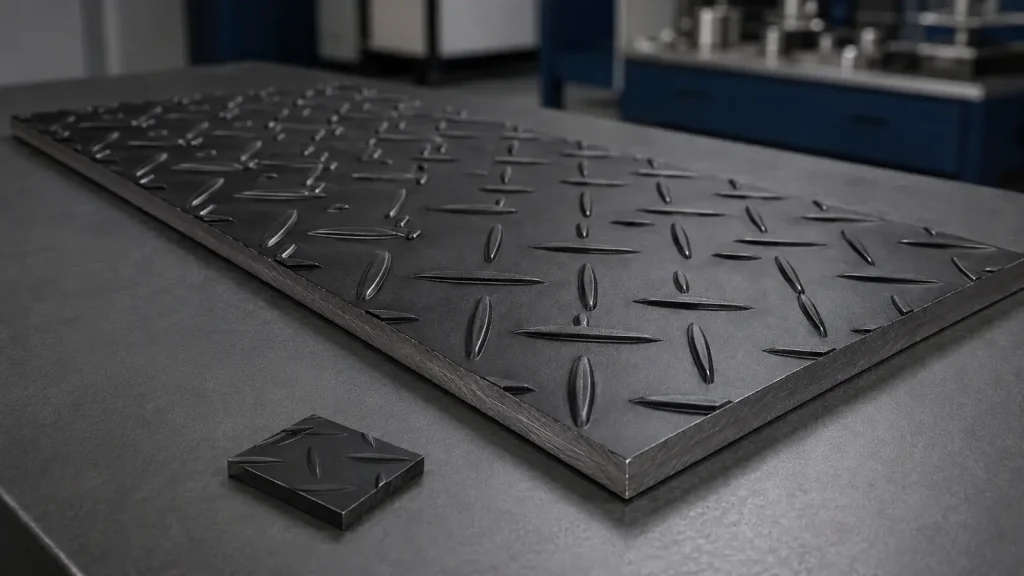
Buyers should evaluate black anodized aluminum tread plate as a complete material-and-finish specification, not as a black decorative surface alone. A workable purchase specification identifies the al…

Before production, buyers should freeze the 5083 aluminum coil’s governing material standard, temper, thickness and tolerance, width and edge condition, coil inside diameter, maximum outside dia…
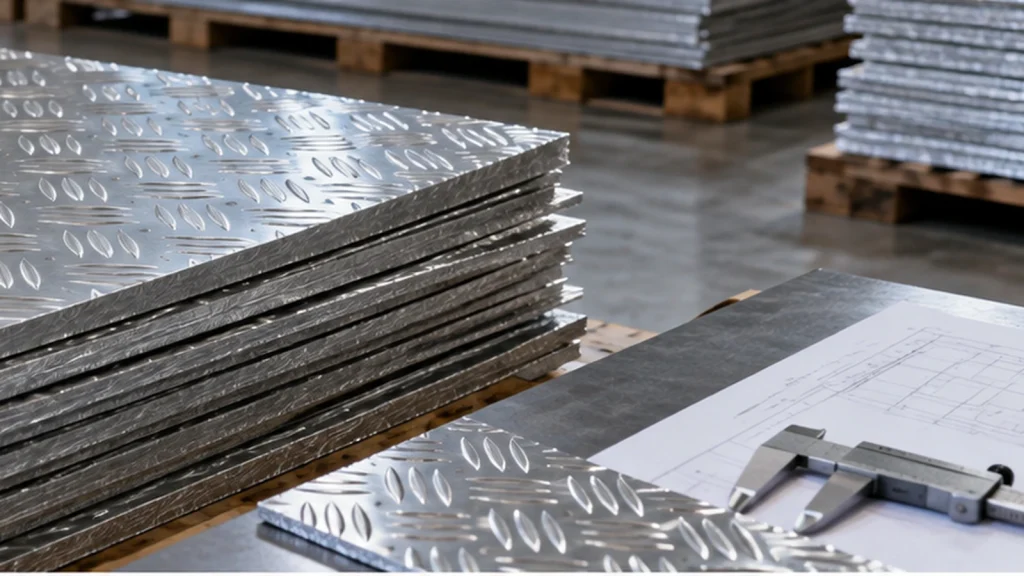
A 4×8 sheet of 1/4 inch aluminum price quotation becomes useful only after the buyer confirms that every supplier is pricing the same product and delivery scope. For this procurement path, the ta…
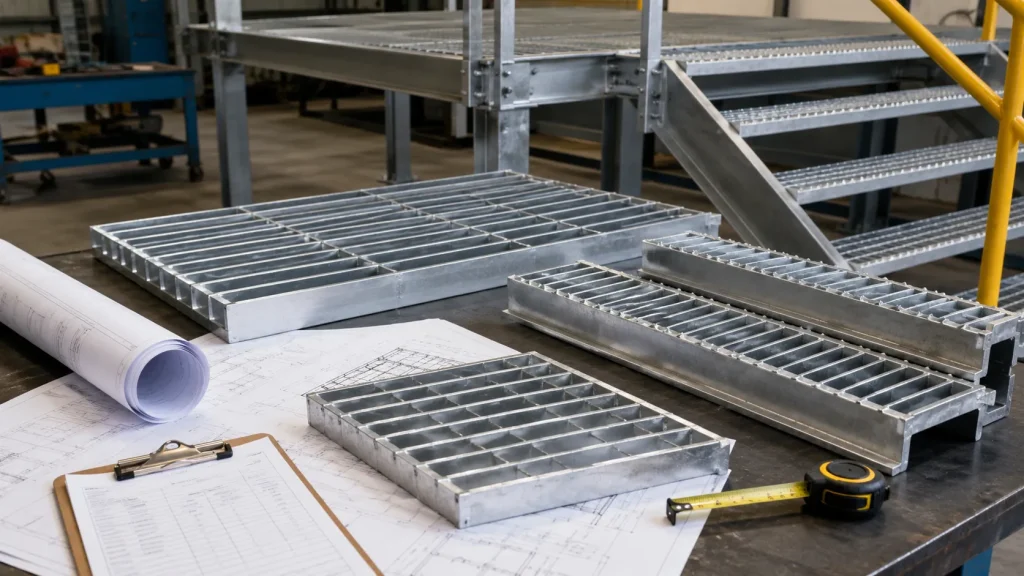
Direct Answer: Buyers should specify aluminum bar grating from the load path outward: first define the walkway or stair application, clear span, support layout, load and deflection basis; then confirm…
Not without checking both applications. A hull panel may have structural and welding requirements that an interior cover does not. Specify each part’s duty before accepting one material for both.
The choice depends on the drawing and fabrication method, not just the marine label. Compare the required strength, bendability and weldment design with the proposed alloy and temper; do not substitute one for the other without design approval.
No. Corrosion performance also depends on exposure, drainage, joints and contact with other metals. Ask for an alloy designation rather than treating “marine grade” as a material specification.
Not necessarily. A visible cover may need a particular appearance, while a walking surface needs its surface condition evaluated for the intended use. Neither choice replaces the required alloy, temper or structural assessment.
Ask for the proposed alloy, temper, thickness tolerance and material documentation in writing. Compare them with the drawing and have the responsible designer approve any change that affects a structural or welded part.
Send the part’s application or drawing, required alloy and temper if specified, and the sheet thickness, size and quantity.